
Posted on10 March 2026
What Happens When a Translation Goes Wrong? (And How to Make Sure It Doesn’t)

In most industries, a mistake gets caught, corrected, and filed away as a lesson learned. In highly regulated industries (e.g., pharmaceutical, clinical trials, or healthcare), the stakes can be quite different. It’s not only embarrassing when there’s a poorly rendered term on a patient leaflet or an application inconsistency flagged by a regulatory authority. These are the types of mistakes that can be costly, time-consuming, and in some cases, potentially harmful.
This week, we’re going to walk through three hypothetical yet entirely plausible scenarios where translation goes wrong. Then we’ll identify the specific safeguards that would have prevented each from happening.
What can we help with today? Call us on +44 (0)1727 812 725 or email us at team@atlas-translations.co.uk – we’re only a call, chat, or email away, and we’re always happy to help!
The Mislabelled Dosage
A manufacturer has a new paediatric formulation translated into three European languages ahead of launch. The translator, working without a client-approved glossary, uses the term “daily dose” for the instruction. In one of the target languages, that phrase is more commonly understood as “per administration.” The packaging clears internal review and goes to print.
The error isn’t discovered until a pharmacist raises a query.
Two things were missing here:
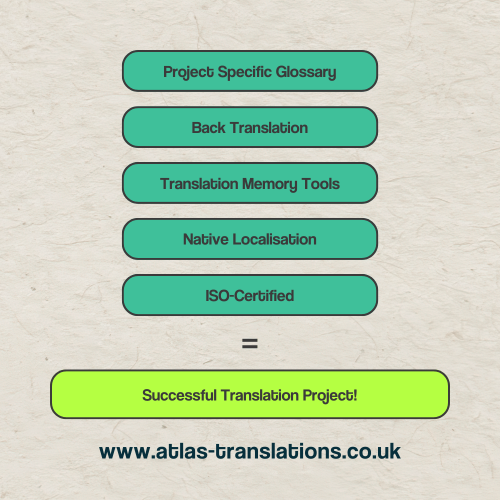
- A project-specific glossary – a document that captures approved terminology so the same translation decisions are made consistently, regardless of who’s doing the work or when.
- A back-translation step – having the completed translation rendered back into the source language by an independent linguist. This is done specifically to catch ambiguities that look fine on the surface but carry a different meaning in context.
For any information on a physical product (especially anything dosage-related), these steps are an expected baseline.
The Rejected Regulatory Submission
A contract research organisation (CRO) submits translated patient-facing documents to a national authority referencing a Phase III trial application. The authority flags inconsistencies in the rendering of adverse event terminology across the informed consent form and the patient diary. The submission is returned for revision, pushing the trial start date back by six weeks.
In this instance, two different translators worked on the documents, using different reference materials, with no shared translation memory.
Translation memory tools solve this problem directly. Once a term or phrase has been approved, it’s stored and applied consistently across every document in the project. It’s also stored for every future project for that client. The result is a body of work that reads as though it came from a single, well-briefed source, because in effect, it did.
This is one of the reasons that partnering with an ISO 17100 certified translation agency matters in practice, rather than just on paper. The standard requires these processes to be in place and audited, and not just a “to-do” item on a whiteboard.
The Localisation Blunder
Next, we see a pharmaceutical company launching a patient support campaign across four global markets. The central message reassures patients that the treatment “works quietly in the background.” In one target language, that phrase carried a connotation of secretive or undisclosed, almost the opposite of the intended reassurance. The local marketing team flags it after launch.
The translation was linguistically accurate. The problem was that it was only linguistically accurate.
Localisation goes further than translation. For patient communications and marketing materials, in-country review by a native-speaking translator with genuine cultural fluency is priceless. It’s what fills the gap between what something technically means and what it actually communicates to a reader in that market.
Language proficiency and cultural insight are related, but they’re not the same thing. It’s this kind of scenario that shows exactly where that distinction shows up.
A Common Thread
The three scenarios above look different on the surface, but they share a common underlying thread: no standardised reference materials, quality checkpoints, or localisation. Every project was either winging it, starting from scratch, or poorly considered, with no shared materials or managed processes in place.
The good news is that none of this requires a complicated overhaul of how you work.
Agencies certified to ISO 17100 and ISO 9001 standards have these safeguards built into every project. Glossary management, translation memory, qualified review processes, and documented quality checks are the norm at each stage of a translation project. When you work with a certified partner like Atlas Translations, you don’t have to hope that those systems exist, because they’ve been in place for years.
If you’d like to talk through how your current translation workflows measure up, or you’re bringing on a new project and want to get the setup right from the start, we’re keen as biscuits to have that conversation with you.
We’d Love to Hear From You!
You can call us on +44 (0)1727 812 725 or email team@atlas-translations.co.uk. We respond quickly to all enquiries and are always happy to chat about your needs.
If you’d like to visit us in person to learn more about our services or drop off documents, just call or email us to arrange a time.
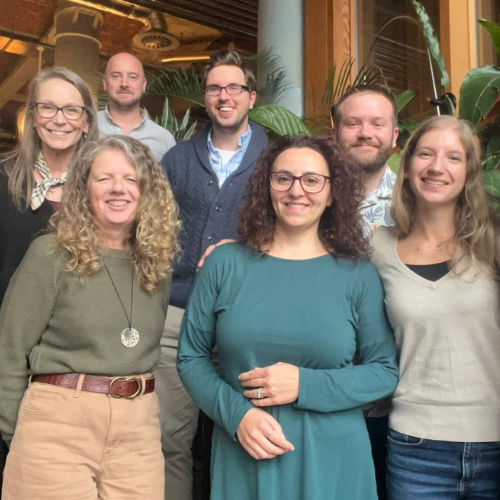
The A-Team (back row: Anna, Jim, Alex, and Rhys; front row: Clare, Steffi, and Joanna)
You can use the live chat button during UK business hours, or click the envelope to leave us a message when we’re not in the office. Plus, you can also use our Get a Quote button at the top of the website for a quick price estimate.
Can I Trust Atlas Translations?
Atlas Translations is certified to ISO 9001:2015 (Quality Management) and ISO 17100:2017 (Translation Services) standards. For confidential projects, we’re happy to sign a non-disclosure agreement (NDA). Registered with the Information Commissioner’s Office (ICO) for over 20 years now, reflecting our long-standing commitment to privacy and data protection.
We’re proud to provide fast, friendly, high-quality services, but don’t just take our word for it. Check out our client testimonials and TrustPilot reviews.
Global Voice, Local Touch
If you’re looking for some top tips for partnering with Atlas Translations, we have some top tips to share! We answer 25 of our clients’ most frequently asked questions, ranging from typesetting queries to discussing reference materials.
Click to download Global Voice, Local Touch