Icelandic translation
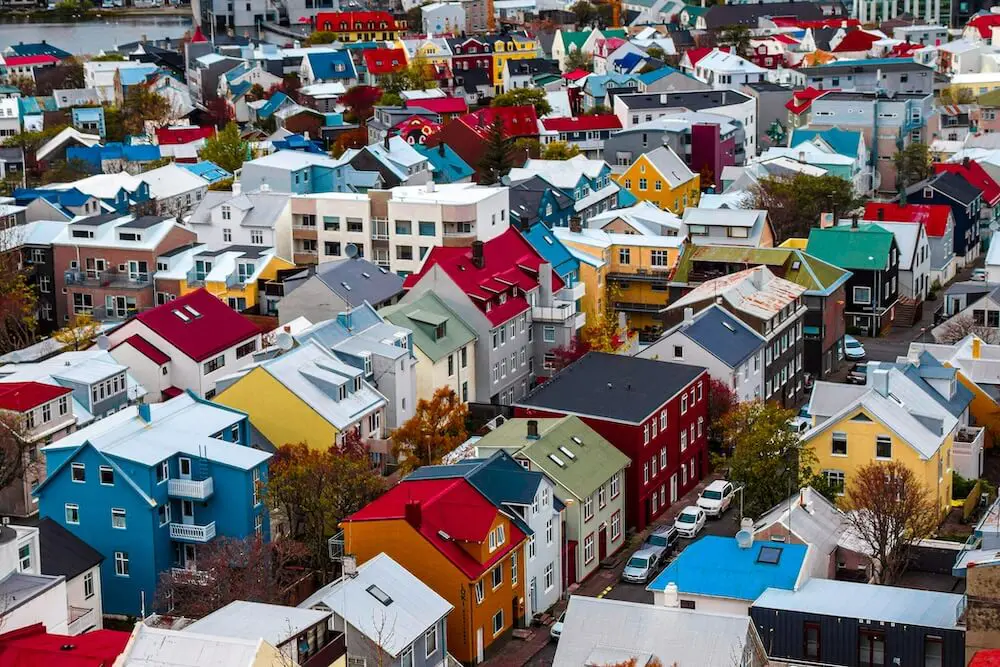
Iceland provokes strong reactions: awe at the landscape, admiration for the social model, and surprise at the improbability of a prosperous nation of around 380,000 people in the middle of the North Atlantic. Its language provokes similar reactions. Icelandic is ancient, remarkably well preserved, grammatically complex and spoken by one of the smallest language communities of any sovereign nation. For a growing range of business purposes it is increasingly relevant, and translation quality matters enormously to a small, educated and linguistically proud community that notices when it is done poorly.
A language frozen in time, in the best possible sense
Icelandic is a North Germanic language descended from Old Norse, and it has changed so little in a thousand years that modern Icelanders can read the medieval sagas in their original form with relatively little difficulty. By European standards that is extraordinary, and it owes something to geographic isolation and something to conscious cultural effort.
It is spoken by around 370,000 to 380,000 people, almost all in Iceland, with small communities in Denmark, the United States and Canada. Icelanders think seriously about how a language this small survives alongside English, and the answer involves fierce cultural pride, active language policy and a tradition of linguistic purism. Instead of borrowing foreign words, Icelandic coins new ones from its own resources. The word for computer, tölva, blends tala (number) and völva (prophetess), and the word for telephone, sími, is an old Norse word for thread.
The grammar is demanding. Icelandic retains four cases, three genders and a complex verb system much of it inherited directly from Old Norse, and there is little for an English speaker to fall back on.
Did you know?
Jæja
If you’re going to learn one Icelandic word, it should be jæja. Icelanders use the word jæja all the time. It means ‘well’, ‘okay, so…’, or ‘alright, shall we go’. It is pronounced ‘yiy yah’: like ‘hiya’ but with a ‘Y’. A simple jæja is often all you need to say.
Compound words
In Icelandic you can create longer words by joining 2 words, or 3 or 4. Or even 23 words as is the case in the longest word in Icelandic. Here goes: vaðlaheiðarvegavinnuverkfærageymsluskúraútidyralyklakippuhringur. The meaning of the word is ‘Key ring of the key chain of the outer door to the storage tool shed of the road workers on the Vaðlaheiði plateau’. You could easily lengthen the word by adding a key colour for example. A more common (and more easily pronounced) word would be ‘apple tree’. The Icelandic word is eplatré.
No surnames
There are no surnames or family names in Iceland. Icelanders use the traditional Nordic naming system, which includes a last name that is from their father’s or mother’s first name with the addition of -dóttir -daughter or -son. That would make our accounts manager Anna Nigelsdóttir and her brother Guy Nigelsson.
Key industries in the Icelandic market
Fishing and seafood
Fishing is the bedrock of Iceland’s economy, supplying seafood to Europe, North America and Asia. Export documentation, compliance, sustainability certification and commercial contracts generate steady, specialist translation demand.
Tourism and hospitality
Tourism has grown dramatically, from a few hundred thousand visitors annually to well over two million in recent years. Websites, visitor information, booking platforms and in-destination communications create ongoing multilingual content needs.
Energy and geothermal
Iceland is a world leader in geothermal energy, with almost all of its electricity and heating from renewable sources. Its expertise is exported globally, and the companies involved produce technical, regulatory and commercial documentation requiring specialist translation.
Technology and data centres
A cool climate, abundant renewable energy and political stability have made Iceland attractive for data centres serving European and global technology companies, with growing commercial, legal and technical translation needs.
Financial services
Iceland’s financial sector, rebuilt after the collapse of 2008, is smaller and more carefully regulated than before but remains significant, generating financial translation needs in both directions.
Creative industries and gaming
Iceland has a remarkable creative sector for its size, with a world-famous music scene, film and television industry and a games community. CCP Games, creator of Eve Online, is Icelandic, and the sector generates subtitling, localisation and marketing translation.
Marine and shipping
Beyond fishing, port operations, marine engineering and the growing cruise industry generate operational and commercial documentation requiring Icelandic translation.
“I am a will writer and had taken will instruction from an elderly lady, who has poor eyesight and limited English skills. Atlas translated the Will I had written into Italian for me, certified the translation and then Visited with me to see my client at her home and read over the Will in Italian so that my client could understand it properly.
This service was so professional, the interpreter was delightful and skilled and my client was happy to sign the Will and I was confident that she completely understood it which is my job. Atlas and Ilenia the interpreter were fantastic and I shall use them again if required.”
Why translate your business materials into Icelandic?
The Icelandic market has high expectations
Iceland has one of the highest literacy rates in the world and a population acutely aware of the quality of its language. Poorly translated Icelandic is noticed immediately, and in a market this small reputational damage travels fast.
Legal and regulatory requirements apply
Consumer contracts, financial product disclosures and pharmaceutical labelling all carry Icelandic-language requirements. The regulatory framework, closely aligned with EU standards through the EEA, is modern and well enforced.
The fishing and seafood sector makes Icelandic practically relevant
For businesses importing Icelandic seafood, supplying the fishing industry or working in certification and sustainability, Icelandic documentation is a commercial reality.
Geothermal expertise is in global demand
Icelandic companies working on geothermal projects abroad need materials in both Icelandic and the target language, and businesses procuring from the sector need the same in reverse.
Tourism content needs to be genuinely good
Iceland’s tourism market is international and competitive, and for domestic businesses high-quality Icelandic content is a baseline requirement.
Getting Icelandic right
Machine translation performs particularly poorly with Icelandic, because the grammatical complexity, small volume of training data and structural distance from English produce output that falls apart quickly under native-speaker scrutiny. Iceland’s linguistically proud population notices immediately, and the damage to credibility is done.

Why trust Atlas with your Icelandic translation?
Icelandic is one of the more specialised languages we work with. It is a small language with a small pool of qualified translators, a community with very high standards and a grammar that requires expertise. Exactly the conditions under which an experienced, careful agency makes the most difference.
Genuine native-speaker specialists
Our Icelandic translators are native speakers with subject-matter expertise. Native fluency is a baseline, and we go beyond it.
Human translation, always
Every Icelandic project is handled by a human translator who knows the language from the inside, never by an automated tool.
A named project manager on every job
Icelandic projects are small in volume but high in importance, and each is led by a dedicated member of our team who takes personal responsibility for quality and delivery. You will always know who is handling your project.
ISO-certified quality
Atlas holds ISO 9001:2015 (Quality Management) and ISO 17100:2017 (Translation Services) certifications, and was one of the first UK translation agencies to achieve the latter. For clients in financial services, pharmaceuticals and legal sectors operating in Iceland under the EEA framework, these provide the quality assurance you need.
35 years of experience
Atlas has been building expertise since 1991 in exactly the kinds of languages where genuine specialism matters most, where the translator pool is small and the community’s standards are high. Icelandic is one of them, and we take it seriously.
Why trust Atlas Translations?


Read more about our commitment to quality
Certified translations by certified humans
Frequently asked questions
How much does Icelandic translation cost?
Projects vary in need, length, and complexity. If you’re interested in our services and need a fast cost estimate, use our price calculator. Alternatively, you can request a quote or call us to talk it through on 01727 812 725.
How long does it take?
How long is a piece of string? It really depends.
It’s best to give us a call on 01727 812 725 to discuss your project and we can give you a more precise timeframe. We are known for our speedy turnarounds, though…
Do you work with any language?
Looking for more than just Icelandic?
We are confident that we have your needed language covered. From American English to Zulu, we’ve worked on more than 340 languages since 1991, including Latin and Ancient Greek. Read more about the languages we offer.
How do I know I can trust Atlas Translations?
Atlas Translations holds two ISO certifications — ISO 9001:2015 (Quality Management) and ISO 17100:2017 (Translation Services). If the project is confidential, we can sign NDAs for extra peace of mind.
Are you wondering if we’re up to date on privacy? We registered with the Information Commissioner’s Office (ICO) over twenty years ago, and we have always prioritised data protection.
Rad more about our commitment to quality.
Atlas Translations are here to support you. Whether you’re an individual, a SME or a multinational corporation, we can help.
Need an Icelandic translation?
Email us on team@atlas-translations.co.uk
Call us on 01727 812 725
Tell us some details and get a quote
Use the chatbox to start a conversation. It’s a real-life human, no bots here! (During UK business hours – we do need to sleep.)
See more options on our contact page.