Arabic translation
Arabic is a language of science, poetry, philosophy, and faith that has shaped the world for over a millennium and a half. With somewhere between 400 and 450 million speakers, it is the fifth most widely spoken language on the planet, and as the liturgical language of Islam it holds spiritual significance for nearly two billion people worldwide.
One language, many languages
Arabic occupies a unique position among the world’s major languages because it effectively exists in two forms simultaneously. Modern Standard Arabic (MSA), known in Arabic as fusha, is the formal, written register used in newspapers, official documents, literature, broadcasting, and education across the Arab world. Every educated Arabic speaker can read and write it, regardless of where they are from.
Then there are the colloquial dialects. Egyptian Arabic, Levantine Arabic, Gulf Arabic, Moroccan Darija, and others differ from one another significantly, sometimes to the point where speakers from opposite ends of the Arab world struggle to follow each other in casual conversation. For written business communications, MSA is almost always the right choice. For content that needs to feel warm and local, such as advertising or social media, dialect choices matter enormously.
Where Arabic is spoken
Egypt is the most populous Arabic-speaking country, with around 105 million people. Egyptian Arabic has an outsized cultural influence across the region thanks to Egypt’s historic dominance in film, television, and music. It is the dialect most widely understood by other Arabic speakers, which gives it a particular usefulness in pan-Arab communications.
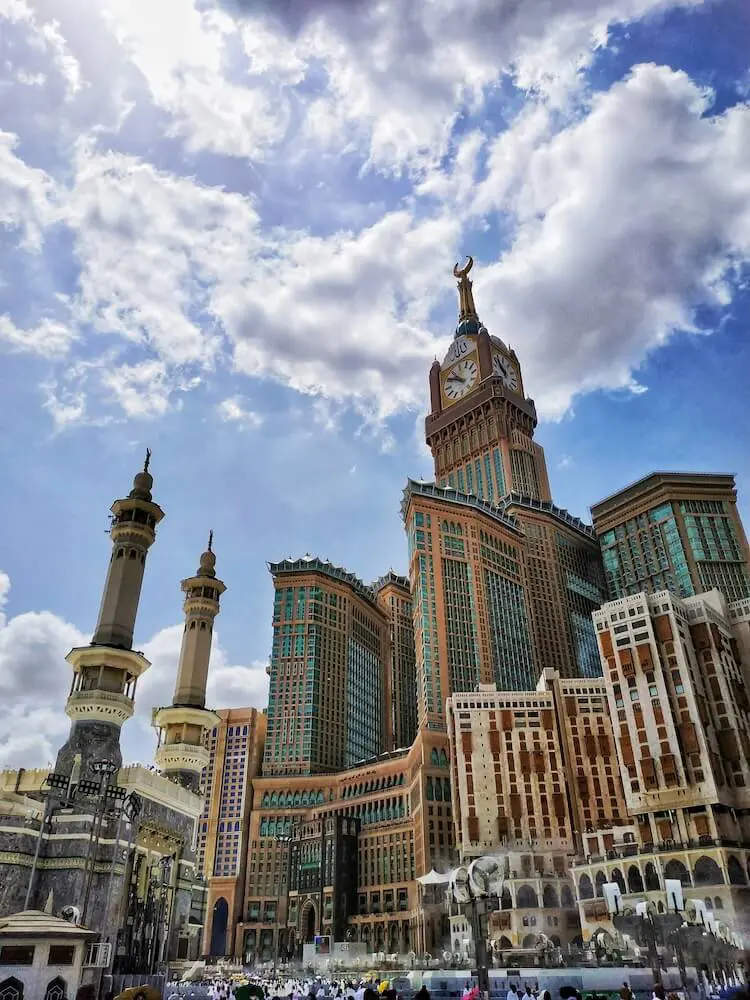
Saudi Arabia has a population of around 35 million and sits at the centre of the Arab world both religiously and economically. As the birthplace of Islam and the custodian of its holiest sites, and as the world’s largest oil exporter, Saudi Arabia carries extraordinary weight in the region. Its ongoing Vision 2030 reform programme is transforming its economy and opening significant new commercial opportunities.
Algeria, Morocco, and Tunisia together account for nearly 100 million Arabic speakers across North Africa. These countries have deep historical ties to France, and French remains widely spoken alongside Arabic. But Arabic is the official language and the one that carries cultural authority. Moroccan Darija in particular is quite distinct from MSA and other dialects.
Iraq has a population of around 42 million, with Arabic spoken alongside Kurdish in many parts of the country. It is a market with significant reconstruction and development needs, and growing international business activity.
The Levant — Syria, Lebanon, Jordan, and Palestine — is home to around 40 million Arabic speakers. Levantine Arabic is one of the most widely recognised dialects outside the region, alongside Egyptian.
The Gulf states — the UAE, Kuwait, Qatar, Bahrain, and Oman — have relatively small native populations but outsized economic significance. The UAE alone, with its hub cities of Dubai and Abu Dhabi, is one of the world’s busiest centres of international trade, finance, and tourism.
Sudan, Yemen, Libya, and Mauritania round out the Arabic-speaking world, each with their own distinct dialect, culture, and economic profile.
The Arabic diaspora is substantial and spread across the globe. France alone has several million Arabic speakers. The US, UK, Germany, Canada, and Australia all have large, well-established Arabic-speaking communities.
Key industries in Arabic-speaking markets
Energy and petrochemicals
The Gulf states sit atop a significant proportion of the world’s proven oil and gas reserves, and the energy sector generates an enormous volume of technical, legal, and commercial documentation. Even as the region diversifies, energy remains central to its economy and its translation needs.
Construction and infrastructure
Across the Arab world, but especially in the Gulf and in post-conflict recovery contexts like Iraq and Libya, construction and infrastructure investment is vast. Contracts, specifications, safety documentation, and tenders all require careful translation.
Financial services and Islamic finance
The Arab world has a sophisticated and growing financial sector, with Islamic finance, which operates according to Sharia principles, representing a particularly specialised and fast-growing niche.
Retail and luxury goods
Gulf consumers are among the world’s most significant luxury spenders, and the region’s retail sector is large, competitive, and brand-conscious.
Technology and telecoms
Arabic is the fastest-growing language on the internet by some measures, and tech companies are increasingly investing in Arabic-language products, interfaces, and content. The demand for high-quality Arabic localisation in the tech sector is enormous and still growing.
Healthcare and pharmaceuticals
Patient documentation, clinical trials, drug labelling, and public health communications all require reliable, accurate Arabic translation across a region of nearly half a billion people.
Media, publishing and education
Arabic has a rich literary and intellectual tradition, and the region’s publishing, broadcast, and education sectors are substantial. Educational content in particular is an area of significant and growing translation activity.
Tourism and hospitality
The UAE, Saudi Arabia, Jordan, and Morocco are all major tourism destinations investing heavily in attracting international visitors, while Gulf travellers are themselves among the world’s most frequent and highest-spending tourists.
“I am a will writer and had taken will instruction from an elderly lady, who has poor eyesight and limited English skills. Atlas translated the Will I had written into Italian for me, certified the translation and then Visited with me to see my client at her home and read over the Will in Italian so that my client could understand it properly.
This service was so professional, the interpreter was delightful and skilled and my client was happy to sign the Will and I was confident that she completely understood it which is my job. Atlas and Ilenia the interpreter were fantastic and I shall use them again if required.”
Why translate your business materials into Arabic?
The scale of the opportunity
The combined GDP of the Arab League countries runs to several trillion dollars. The region’s consumer markets are large and growing. As Arabic is spoken by so many people in so many places, the combined volume of potential customers is huge.
Diaspora communities are loyal to brands that speak their language
Arabic speakers in Europe and North America are often underserved by brands in their adopted countries. A company that communicates in Arabic earns goodwill and long-term loyalty.
The Gulf is a gateway
For many international businesses, the UAE serves as a launching pad into the wider Arab world. Getting your Arabic-language materials right for Dubai or Abu Dhabi gives you a foundation you can build on across the region.
Did you know…
It’s not just words
With so many different areas in which Arabic is spoken, as well as cultural and religious considerations, localisation is a key part of our translation process. For example, here at Atlas, we worked on a food diary product. As well as translating the text into different Arab dialects, we also identified ingredients to swap for those that could be easily bought in different markets.
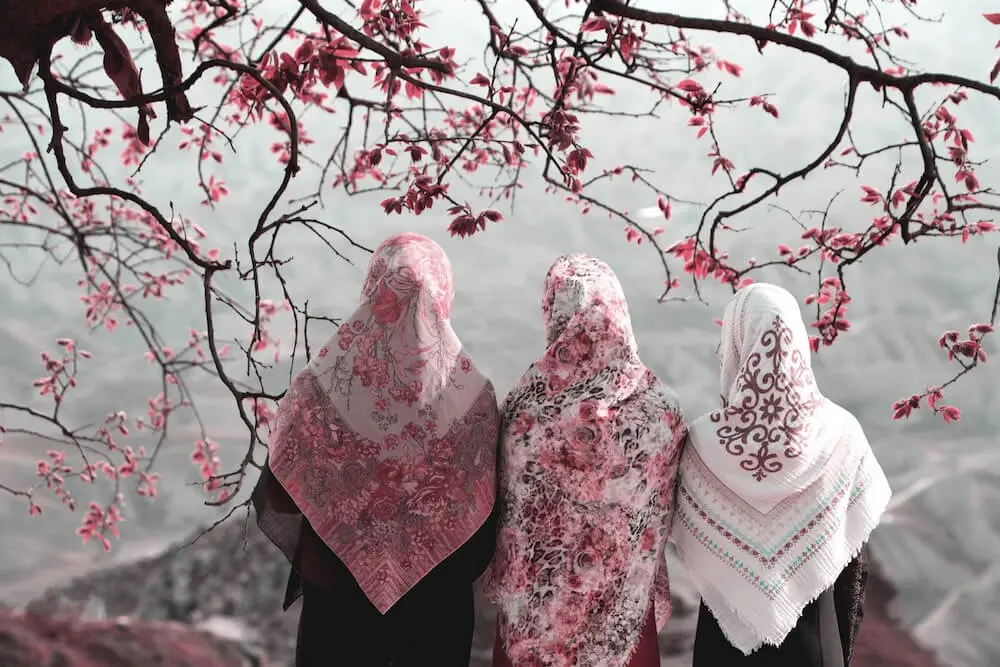
With the marketing materials for a shampoo, we collaborated with the client to focus the benefits on the smell and feel for the user, rather than the visual results, which don’t land as impactfully in a culture where hair is covered.
Getting things right, the right way round
Arabic is read right to left, which can cause confusion to designers used to text which works the other way around. Our knowledge of the language means we can always get the typesetting right. We’ve seen clients where their typesetter had actually flipped the script upside down!
Language of love
Arabic has 11 words for ‘love’, with the most common, ‘hubb’, having the same root as the word for ‘seed’, which links to love as it can grow into something beautiful.
Why trust Atlas with your Arabic translation?
Arabic is one of the most complex translation challenges in international business. A language where the stakes of getting it wrong are high and the rewards of getting it right are significant. It is also one where Atlas has built deep, tested expertise over more than three decades.
Native speakers with regional and subject-matter knowledge
Arabic translation is not a single skill. The dialect question, the simplified versus formal register question, the cultural and religious sensitivity question: all of these require translators who are not just fluent but genuinely expert in the specific market and context you are working in. Our translators are matched to projects on all of these criteria.
Right-to-left layout and design experience
Arabic is not just a translation challenge, it is a visual challenge. The right-to-left script has real implications for design, layout, and digital implementation, and we flag these early and handle them properly.
ISO-certified, professionally accredited
Our ISO 9001:2015 and ISO 17100:2017 certifications apply to our Arabic work as to everything else. For clients in healthcare, pharmaceuticals, financial services, and legal sectors – where Arabic-language compliance is often legally required – this level of documented quality assurance is frequently essential.
A full-service agency
Arabic voiceover, subtitling, interpreting, and DTP are all things we do, which means that if your Arabic project is more complex than a straightforward document translation, we have the capability to handle it.
35 years of client relationships across every sector
From multinational corporations to NHS organisations to individual clients needing certified personal documents, we bring the same level of care to every Arabic translation project regardless of size.
Why trust Atlas Translations?


Read more about our commitment to quality
Certified translations by certified humans
Frequently asked questions
How much does Arabic translation cost?
Projects vary in need, length, and complexity. If you’re interested in our services and need a fast cost estimate, use our price calculator. Alternatively, you can request a quote or call us to talk it through on 01727 812 725.
How long does it take?
How long is a piece of string? It really depends.
It’s best to give us a call on 01727 812 725 to discuss your project and we can give you a more precise timeframe. We are known for our speedy turnarounds, though…
Do you work with any language?
Looking for more than just Arabic?
We are confident that we have your needed language covered. From American English to Zulu, we’ve worked on more than 340 languages since 1991, including Latin and Ancient Greek. Read more about the languages we offer.
How do I know I can trust Atlas Translations?
Atlas Translations holds two ISO certifications — ISO 9001:2015 (Quality Management) and ISO 17100:2017 (Translation Services). If the project is confidential, we can sign NDAs for extra peace of mind.
Are you wondering if we’re up to date on privacy? We registered with the Information Commissioner’s Office (ICO) over twenty years ago, and we have always prioritised data protection.
Rad more about our commitment to quality.
Atlas Translations are here to support you. Whether you’re an individual, a SME or a multinational corporation, we can help.
Need an Arabic translation?
Email us on team@atlas-translations.co.uk
Call us on 01727 812 725
Tell us some details and get a quote
Use the chatbox to start a conversation. It’s a real-life human, no bots here! (During UK business hours – we do need to sleep.)
See more options on our contact page.