Cantonese translation
Cantonese (or Yue) is one of the most vibrant, characterful, and commercially significant languages in the world and also one of the most frequently misunderstood. It is routinely conflated with Mandarin, treated as a dialect rather than a language in its own right, and overlooked by businesses that assume Chinese is Chinese. None of that does justice to a language spoken natively by around 80 to 85 million people, with a diaspora that reaches into virtually every major city on earth, a film and music industry that shaped popular culture across Asia for decades, and a speaker community that feels strongly about the distinction between their language and any other. If your business has connections to Hong Kong, Macau, Guangdong province, or the vast global Cantonese diaspora, this page is worth reading carefully.
Cantonese and Mandarin: what’s the difference?
This is the question that comes up most often, so it is worth addressing directly. Cantonese and Mandarin are both Chinese languages, part of the Sino-Tibetan family, and they share a written tradition in Chinese characters. But they are not mutually intelligible in speech. A Cantonese speaker and a Mandarin speaker, talking to each other in their respective languages, will understand very little of what the other is saying. The vocabulary, the pronunciation, and the tonal system are all significantly different.
Cantonese has six tones (sometimes described as nine, depending on how you count the entering tones); Mandarin has four. The sounds of the two languages are distinct enough that many linguists argue the term ‘dialect’, which implies mere regional variation of a single language, is politically convenient rather than linguistically accurate.
The written situation adds another layer of complexity. Formal written Chinese, used in official documents, newspapers, and literature, is based on Mandarin grammar and is read by educated speakers of both languages. But Cantonese also has its own written colloquial form, used in informal contexts, messaging, social media, and popular culture, with its own characters and constructions that Mandarin speakers do not use and may not recognise.
For consumer-facing content, social media, and anything meant to feel warm and natural to a Cantonese audience, colloquial written Cantonese is often the right choice. For formal, legal, and official documents, standard written Chinese may be more appropriate. It is the kind of decision that depends on your audience and your purpose. And it’s exactly the sort of thing we will talk through with you before any project begins.
The short version: commissioning a Mandarin translation and expecting it to serve a Cantonese audience is a mistake. The communities are distinct, the languages are different, and your audiences will notice.
Where Cantonese is spoken
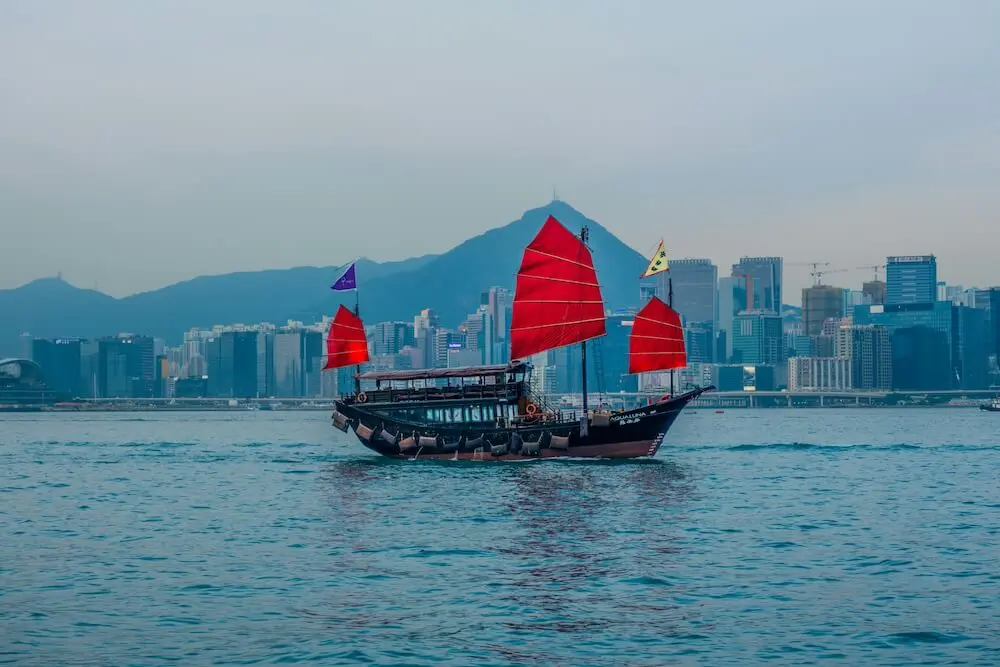
Hong Kong is the place where Cantonese has the strongest institutional presence. With a population of around 7.5 million, Hong Kong is one of Asia’s great financial and commercial hubs, a centre of international trade, professional services, and historically a gateway between China and the rest of the world. Cantonese is the dominant spoken language of daily life, and although Mandarin has grown in prominence in recent years, Cantonese remains the language of the street, the home, and for many people, the heart. For businesses operating in or with Hong Kong, Cantonese translation is a necessity.
Macau, the former Portuguese territory and now a Special Administrative Region of China, has a population of around 650,000 and is predominantly Cantonese-speaking. It is best known internationally as the world’s largest gambling hub (its gaming revenues have historically dwarfed those of Las Vegas) but it also has a significant financial services sector and a unique cultural identity shaped by centuries of Portuguese and Chinese coexistence.
Guangdong Province in southern mainland China is the ancestral home of the Cantonese language, with a population of over 130 million people. The provincial capital is Guangzhou (historically known in English as Canton, which is where the language gets its English name). The Pearl River Delta, encompassing Guangzhou, Shenzhen, Dongguan, and surrounding cities, is one of the most productive manufacturing and export regions on earth. While Mandarin is the official language of the mainland and is used in formal and official contexts, Cantonese remains the everyday spoken language of much of Guangdong.
Guangxi, the autonomous region to the west of Guangdong, also has significant Cantonese-speaking populations, particularly in its eastern areas.
The global Cantonese diaspora is one of the most widely distributed linguistic communities in the world. Cantonese speakers, predominantly from Guangdong and Hong Kong, have been emigrating for well over a century. Established communities exist in the UK, the USA and Canada, Australia and across Southeast Asia.
Wherever the Cantonese diaspora has settled, it has maintained the language with remarkable tenacity. Cantonese-language media, restaurants, cultural organisations, and community institutions thrive in cities far from Guangdong, and the language remains a living, daily presence for millions of people far from its geographic origins.
Key industries in Cantonese-speaking markets
Finance and professional services
Hong Kong is one of the world’s premier financial centres: a hub for investment banking, asset management, private equity, insurance, and legal services. It is the primary offshore market for the Chinese renminbi and a major centre for IPOs. The volume of financial documentation — prospectuses, fund materials, regulatory filings, legal contracts, compliance documents — that flows through Hong Kong is enormous, and much of it requires translation into or out of Cantonese and standard written Chinese.
Manufacturing and export
The Pearl River Delta is among the most productive manufacturing regions on earth, producing electronics, clothing, furniture, toys, machinery, and a vast range of consumer goods for global markets. Supply chain communications, quality documentation, compliance materials, and commercial contracts in this region frequently require Cantonese alongside Mandarin and English.
Gaming and hospitality
Macau’s gaming and hospitality industry is a significant employer and economic driver, attracting visitors from across Asia and beyond. The sector generates considerable translation needs across marketing, regulatory, and operational documentation.
Property and real estate
Hong Kong has one of the world’s most active and internationally engaged property markets. Real estate transactions, investment documentation, and property marketing materials routinely require professional translation.
Retail and luxury goods
Cantonese-speaking consumers, both in Hong Kong and in diaspora communities, are significant luxury goods purchasers. Hong Kong’s retail sector is large and internationally oriented, and luxury brands invest substantially in communicating well with Chinese-speaking consumers, with Cantonese-specific material for the Hong Kong market.
Media and entertainment
Hong Kong was for decades the centre of Asian popular culture: its film industry, music scene (Cantopop), and television dramas had enormous influence across the Chinese-speaking world and beyond. That industry continues, and the demand for translation for things like subtitles, scripts and marketing materials remains active.
Shipping and logistics
Hong Kong and the ports of Guangdong are among the busiest in the world. Shipping, freight forwarding, logistics, and trade finance documentation in this region spans multiple languages including Cantonese.
Education
Hong Kong has a well-developed higher education sector with strong international connections. Academic institutions, student recruitment, and educational publishing all generate translation needs.
“I highly recommend Atlas Translations. They helped me out with the translation of tax documents. They provide a quick and reliable service. And I would 100 % use them again next time I need a document translated. Special thanks to Stefania who has been of great help.”
Why translate your business materials into Cantonese?
Hong Kong demands it
If you are doing business in Hong Kong, in financial services, property, retail, professional services, or any other sector, Cantonese-language capability is not a nice extra. The city operates in Cantonese, and materials that feel properly local resonate in ways that translated-from-Mandarin or English-only content simply does not.
The diaspora is large, loyal, and often underserved
British Chinese, Chinese-Canadian, Chinese-American, and Chinese-Australian communities are predominantly Cantonese-speaking, have significant disposable income, and are not always well served by brands that assume Mandarin will reach them, or that do not bother with Chinese at all. A company that communicates in natural, fluent Cantonese earns genuine loyalty from these communities.
Mandarin is not a substitute
It is worth saying this again plainly. Using Mandarin translation for a Cantonese audience can be actively off-putting, signalling either ignorance of the distinction or indifference to it. Neither impression serves a business well.
The Pearl River Delta is irreplaceable in global manufacturing
For businesses with supply chains in Guangdong, the ability to communicate in Cantonese is a commercial asset in managing factory relationships, quality standards, and day-to-day operations.
Recent Hong Kong emigration has expanded diaspora communities
The political changes in Hong Kong since 2019 have prompted significant emigration, particularly to the UK, Canada, and Australia. These are often educated, professionally qualified, economically active individuals and families, adding to already substantial Cantonese-speaking communities in those countries. Businesses in those markets have a growing Cantonese-speaking audience.

Getting Cantonese right
Cantonese translation involves navigating several layers of complexity that needs expertise. The choice between colloquial written Cantonese and standard written Chinese, the tonal accuracy required for anything that will be spoken or broadcast, the significant differences between Hong Kong Cantonese and Guangdong Cantonese in vocabulary and register, and the cultural nuances that matter enormously to a community with a strong sense of its own identity. All of these require a translator who is genuinely at home in the language.
Machine translation performs particularly poorly with Cantonese. Most systems are trained predominantly on Mandarin data, and the results for Cantonese (particularly colloquial written Cantonese) are often recognisably wrong to a native speaker. In a market like Hong Kong, where standards are high and audiences are discerning, that is a reputational risk not worth taking.
Every Cantonese project at Atlas is handled by a native speaker. Someone who grew up in the language, understands its cultural layers, and knows the difference between a translation that is technically correct and one that actually sounds like a human being wrote it.
Why trust Atlas with your Cantonese translation?
Cantonese is a language where the risks of getting it wrong are particularly high. A Mandarin translation passed off as Cantonese, or a machine-generated text that falls apart on contact with a native speaker, can do real damage to a brand’s credibility in a market that has very high standards and very little patience for carelessness. We take that seriously.
Native Cantonese speakers, not Mandarin speakers working adjacently
The distinction matters enormously and we never fudge it. Our Cantonese translators are native speakers of Cantonese matched to your project by both variety and subject matter.
Colloquial and formal written Cantonese handled correctly
The choice between colloquial written Cantonese and standard written Chinese is one of the first and most important decisions in any Cantonese project. We will always discuss this with you upfront, make a recommendation based on your audience and purpose, and make sure the translation reflects that choice throughout.
Full-service localisation
Cantonese projects often involve more than text: subtitling, voiceover, DTP for Chinese-character layouts or interpreting. Atlas offers all of these, and managing them in one place produces better, more consistent results.
ISO-certified quality assurance
Our ISO certifications, combined with 35 years of experience, provide the quality framework that clients in financial services, legal, and pharmaceutical sectors working with Hong Kong specifically require.
We know the Cantonese market
Hong Kong’s financial and professional services sector, the Pearl River Delta’s manufacturing and export economy, the British Chinese community: these are contexts we work in regularly and understand well.

Why trust Atlas Translations?



Read more about our commitment to quality
Certified translations by certified humans

Frequently asked questions
How much does Cantonese translation cost?
Projects vary in need, length, and complexity. If you’re interested in our services and need a fast cost estimate, use our price calculator. Alternatively, you can request a quote or call us to talk it through on 01727 812 725.
How long does it take?
How long is a piece of string? It really depends.
It’s best to give us a call on 01727 812 725 to discuss your project and we can give you a more precise timeframe. We are known for our speedy turnarounds, though…
Do you work with any language?
Looking for more than just Cantonese?
We are confident that we have your needed language covered. From American English to Zulu, we’ve worked on more than 340 languages since 1991, including Latin and Ancient Greek. Read more about the languages we offer.
How do I know I can trust Atlas Translations?
Atlas Translations holds two ISO certifications — ISO 9001:2015 (Quality Management) and ISO 17100:2017 (Translation Services). If the project is confidential, we can sign NDAs for extra peace of mind.
Are you wondering if we’re up to date on privacy? We registered with the Information Commissioner’s Office (ICO) over twenty years ago, and we have always prioritised data protection.
Rad more about our commitment to quality.
Atlas Translations are here to support you. Whether you’re an individual, a SME or a multinational corporation, we can help.
Need a Cantonese translation?
Email us on team@atlas-translations.co.uk
Call us on 01727 812 725
Tell us some details and get a quote
Use the chatbox to start a conversation. It’s a real-life human, no bots here! (During UK business hours – we do need to sleep.)
See more options on our contact page.