Japanese translation
Japanese is one of the most fascinating, demanding and commercially important languages in the world. With around 125 million speakers, almost all in Japan, it is not among the largest languages, but the economy behind it is among the largest in the world, home to some of the most valuable companies in any industry, and its cultural influence in technology, design, food and entertainment is extraordinary. It is also one of the most challenging languages to translate well, which makes choosing the right partner really important.
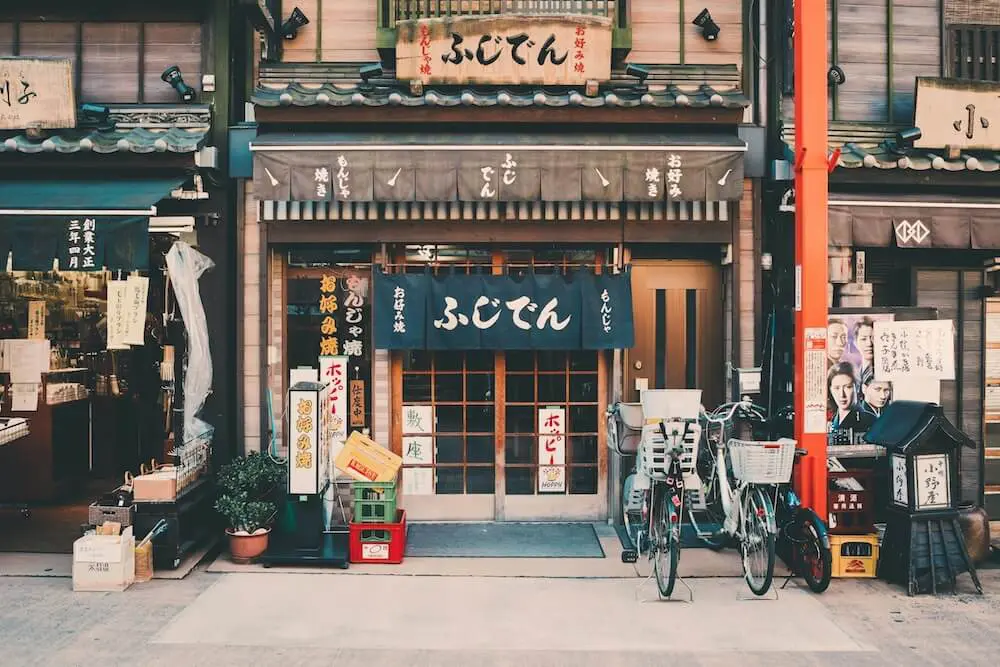
A language of complexity and precision
Japanese belongs to the Japonic family and has borrowed heavily from Chinese and, in modern times, from English. It is overwhelmingly a language of Japan, though the diaspora in Brazil, the United States and Australia is significant in cultural terms.
The writing system is one of the most complex in the world, using three scripts at once, often in the same sentence. Hiragana is a syllabic script used for grammatical elements and native words. Katakana is a parallel syllabic script used mainly for foreign loanwords, technical terms and emphasis, and appears constantly in modern text given the volume of English absorbed into Japanese. Kanji are Chinese-derived characters, of which an educated Japanese person is expected to know around 2,000, with many professionals using more. The implications for typesetting, encoding and layout need to be addressed from the start of any project.
Japanese grammar works on principles unlike English. Verbs come at the end of sentences, and the subject is often omitted when context makes it clear. The language has an elaborate system of honorifics, keigo, encoding the social relationship between speaker and listener through vocabulary, verb forms and sentence endings. Getting the level wrong in a business communication is a significant error in Japanese professional culture, and one a non-specialist translator or any automated tool is very likely to make.
Key industries in the Japanese market
Automotive
Toyota, Honda, Nissan, Mazda, Subaru and Mitsubishi represent a concentration of automotive expertise. The sector generates enormous volumes of technical documentation, quality management materials, supply chain communications and regulatory filings. Concepts such as kaizen and kanban, which originated in Japanese manufacturing, carry nuances translators must handle with care.
Technology and electronics
Sony, Panasonic, Canon, Nikon, Fujitsu, NEC, Sharp and Toshiba have shaped consumer electronics for decades, generating software localisation, product documentation, patent filings and commercial materials in very large volumes.
Pharmaceuticals and medical devices
Japan has the world’s second largest pharmaceutical market and a highly developed medical devices industry. The Pharmaceuticals and Medical Devices Agency (PMDA) has exacting requirements for Japanese-language documentation, making this one of the most specialist areas of Japanese translation.
Finance and banking
Tokyo is one of the world’s great financial centres. Mitsubishi UFJ, Sumitomo Mitsui, Mizuho and Nomura operate internationally and generate large amounts of regulatory, compliance and client documentation..
Gaming and entertainment
Nintendo, Sony PlayStation, Sega, Capcom and Square Enix have Japanese roots, and manga and anime have global audiences of hundreds of millions, generating game localisation, subtitling, dubbing and publishing translation needs.
Retail and luxury
Japanese consumers are among the world’s most discerning shoppers, and marketing, in-store communications and e-commerce content must meet extremely high standards of quality and cultural sensitivity.
Engineering and manufacturing
Fanuc, Keyence and Komatsu operate globally in precision engineering, robotics and industrial machinery, generating technical documentation that needs specialist translation.
Food and beverage
Japanese cuisine has had a huge global influence, and exports of sake, wagyu beef, premium rice and seafood are growing, with export documentation, labelling and certification needing careful translation.
“I am a will writer and had taken will instruction from an elderly lady, who has poor eyesight and limited English skills. Atlas translated the Will I had written into Italian for me, certified the translation and then Visited with me to see my client at her home and read over the Will in Italian so that my client could understand it properly.
This service was so professional, the interpreter was delightful and skilled and my client was happy to sign the Will and I was confident that she completely understood it which is my job. Atlas and Ilenia the interpreter were fantastic and I shall use them again if required.”
Did you know?
English has adopted a fair few words from Japanese such as sushi, origami and karaoke. When it happens the other way around it’s called wasei-eigo: Japanese-made English. Many English words have been loaned into Japanese intentionally rather than by natural assimilation, and thus the meaning of the original English can become distorted. The words enter everyday use and become so commonplace that they can end up meaning something completely different.
Some examples of wasei-eigo:
| Origin | Japanese | Romanised Japanese | Meaning |
| after service | アフターサービス | afutā sābisu | customer service |
| potato chips | ポテチ | pote-chi | potato chips |
| cider | サイダー | saidā | carbonated (lemon-lime) drink |
Hepburn Romanisation is the worldwide standard form of romanising the Japanese language. It was established by James Curtis Hepburn (an American missionary) in 1886 when he published a Japanese to English dictionary.

Why translate your business materials into Japanese?
Japan does not treat English as a substitute
Japanese partners, regulators and consumers expect Japanese communication that is correct, appropriately formal and culturally sensitive. Materials that are obviously machine-translated signal a lack of seriousness that is noticed and remembered.
Regulatory compliance is non-negotiable
PMDA submissions, financial product disclosures, food labelling and consumer contracts all carry Japanese-language requirements, and the standards enforced are high.
The honorific system requires authentic expertise
Choosing the right level of formality for a business letter, a manual or a customer communication takes an understanding of Japanese professional culture that only an experienced human translator can reliably provide.
The automotive and technology supply chains create ongoing needs
For businesses connected to Japanese automotive or technology companies, Japanese technical and commercial documentation is a day-to-day reality.
Japanese popular culture is a global force
For businesses in gaming, entertainment, licensing or consumer brands tied to anime, manga or gaming culture, Japanese translation is a commercial and creative necessity.
Getting Japanese right
The writing system, the honorific register and the cultural expectations of the market all need translators who are true experts. Japanese typography, character encoding, script mixing and vertical text options are things to address at the start of a project, not as an afterthought.

Why trust Atlas with your Japanese translation?
Native Japanese translators with deep sector expertise
The translator for your automotive manual, your PMDA submission, your game localisation and your luxury campaign are four different native speakers with specialist knowledge. We match on subject, register and audience with particular care in Japanese.
Human translation, always
We don’t use AI to translate. Every Japanese project is handled by a real person who is a native speaker of the language.
The writing system handled correctly from the start
Whether your content will appear in print, on a website, in an app or in a video, we make sure the technical implementation works as well as the words.
Keigo and register managed with cultural knowledge
The honorific system cannot be reduced to rules. Our translators bring cultural immersion and professional experience, and we always discuss the relationship context and purpose of your content before work begins.
A named project manager on every job
Every Japanese project is led by a dedicated member of our team who takes personal responsibility for quality and delivery. Projects often combine translation, typesetting, subtitling and voiceover, and one person overseeing them produces better results.
ISO-certified quality
Atlas holds ISO 9001:2015 (Quality Management) and ISO 17100:2017 (Translation Services) certifications, and was one of the first UK translation agencies to achieve the latter. For clients working with the PMDA or Japanese financial regulators, these provide documented quality assurance.
35 years of experience
Japanese has been in our portfolio since Atlas was founded in 1991. If you have a Japanese project to discuss, or are thinking through your approach to the Japanese market for the first time, we would very much like to hear from you.
Why trust Atlas Translations?



Read more about our commitment to quality
Certified translations by certified humans

Frequently asked questions
How much does Japanese translation cost?
Projects vary in need, length, and complexity. If you’re interested in our services and need a fast cost estimate, use our price calculator. Alternatively, you can request a quote or call us to talk it through on 01727 812 725.
How long does it take?
How long is a piece of string? It really depends.
It’s best to give us a call on 01727 812 725 to discuss your project and we can give you a more precise timeframe. We are known for our speedy turnarounds, though…
Do you work with any language?
Looking for more than just Japanese?
We are confident that we have your needed language covered. From American English to Zulu, we’ve worked on more than 340 languages since 1991, including Latin and Ancient Greek. Read more about the languages we offer.
How do I know I can trust Atlas Translations?
Atlas Translations holds two ISO certifications — ISO 9001:2015 (Quality Management) and ISO 17100:2017 (Translation Services). If the project is confidential, we can sign NDAs for extra peace of mind.
Are you wondering if we’re up to date on privacy? We registered with the Information Commissioner’s Office (ICO) over twenty years ago, and we have always prioritised data protection.
Rad more about our commitment to quality.
Atlas Translations are here to support you. Whether you’re an individual, a SME or a multinational corporation, we can help.
Need a Japanese translation?
Email us on team@atlas-translations.co.uk
Call us on 01727 812 725
Tell us some details and get a quote
Use the chatbox to start a conversation. It’s a real-life human, no bots here! (During UK business hours – we do need to sleep.)
See more options on our contact page.