Mongolian translation
Mongolian is the language of one of the world’s most sparsely populated countries and one of its most resource-rich. It is spoken by around 5 to 6 million people, in a country sandwiched between Russia and China that has attracted some of the largest foreign investments in global mining. It is also a language with two scripts, a vertical traditional one and a Cyrillic one, which makes translation more than a matter of words. If your business has interests in Mongolia, Inner Mongolia in China or in the Mongolian-speaking diaspora, this is a language worth understanding.
A language with an imperial past
Mongolian belongs to the Mongolic language family and is the best-known language of its group. It is agglutinative, building meaning by adding suffixes to word roots, and it uses vowel harmony, so that the vowels in a word fall into groups that determine the endings attached to it. It has a number of grammatical cases and a rich system of politeness and respect that matters in professional communication.
The language carries the memory of the Mongol Empire under Chinggis Khaan, which in the 13th century became the largest contiguous land empire in history. Chinggis Khaan remains a national symbol in Mongolia today, and his image appears on banknotes, in brand names and in public life.
The standard spoken form is based on the Khalkha dialect, spoken by the large majority of the population of Mongolia. Other varieties exist, including those of the Buryat and Oirat peoples, and the Mongolian spoken in Inner Mongolia differs in vocabulary and pronunciation from that of Mongolia itself.
Two scripts
The traditional Mongolian script is written vertically, from top to bottom, with lines running from left to right. It has been used for centuries and is the script used in Inner Mongolia in China. In Mongolia itself, a Cyrillic alphabet was adopted in the 1940s under Soviet influence and is used for most day-to-day writing, government and business. In recent years there has been a government push to bring the traditional script back into official use alongside Cyrillic, so it is worth confirming which script your project needs. Choosing the wrong one is not a small error, and it is the first question we ask on any Mongolian project.
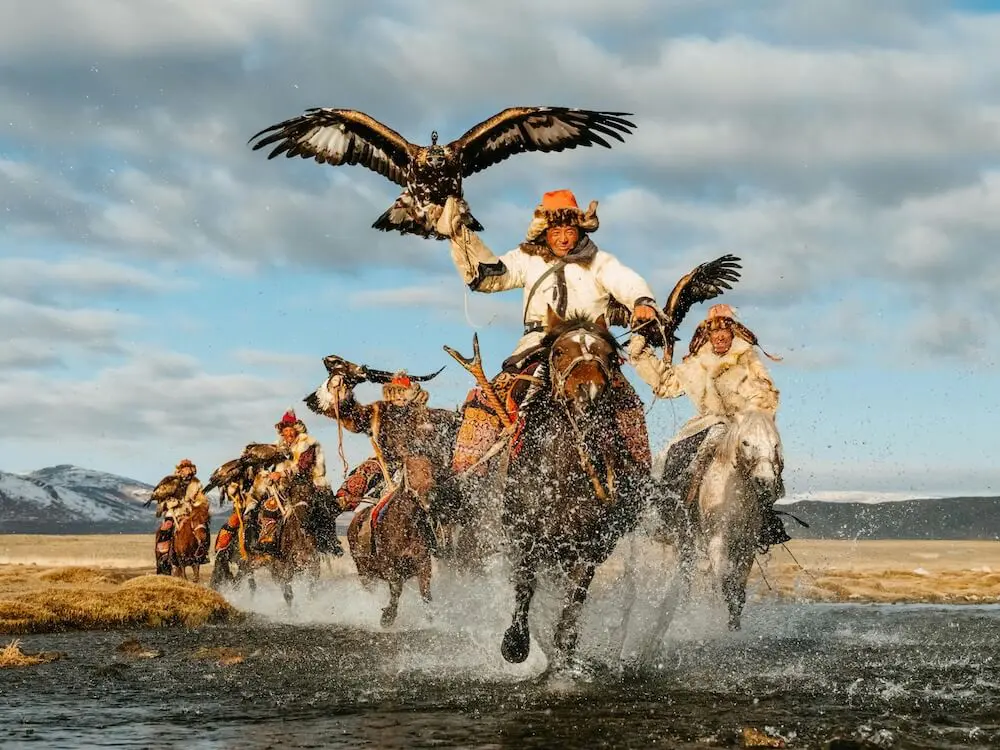
Where Mongolian is spoken
Mongolia
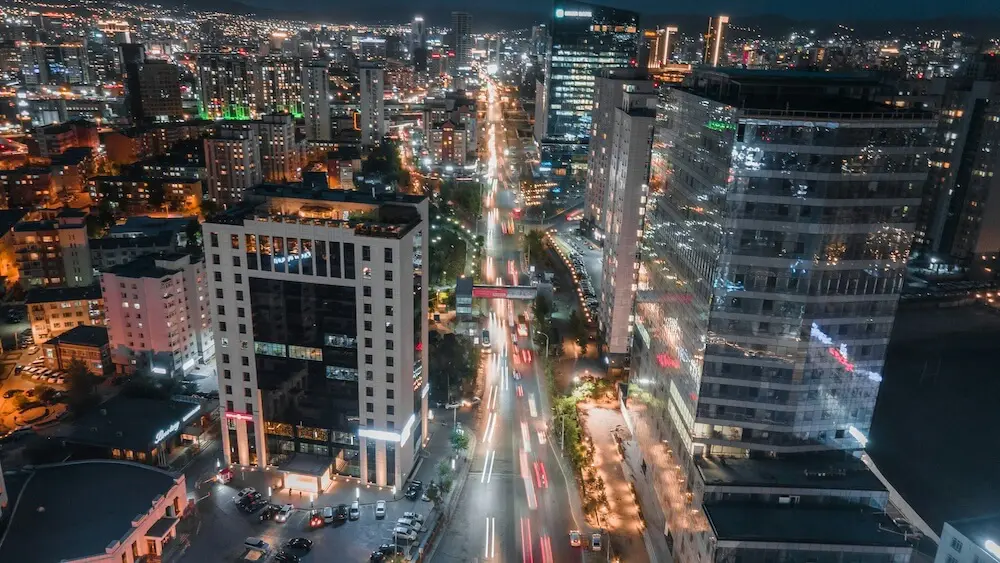
Mongolia has a population of around 3.4 million, almost all of whom speak Mongolian. Around half the population lives in the capital, Ulaanbaatar, which is the centre of government, business and culture. Outside the capital, much of the country is steppe, desert and mountains, with a long tradition of nomadic herding that continues today. Mongolia is a parliamentary democracy and has pursued what it calls a ‘third neighbour’ policy, building relationships beyond its two giant neighbours.
Inner Mongolia, China
The Inner Mongolia Autonomous Region has a large ethnic Mongol population, numbering several million, who use the traditional script. The region’s economy is shaped by coal, rare earths, energy and agriculture, and it is administered within China’s Mandarin-language framework, so Chinese and Mongolian often meet in the same documents.
The diaspora
Mongolian communities exist in South Korea, Japan, the United States, the Czech Republic and elsewhere, many of them formed through study and work migration in recent decades. Buryat and Kalmyk communities in Russia speak related languages.
Key industries in Mongolian-speaking markets
Mining and natural resources
Mining is the engine of the Mongolian economy. Oyu Tolgoi, one of the world’s largest copper and gold deposits, is operated by Rio Tinto, and the Tavan Tolgoi coal field is among the largest in the world. Investment agreements, environmental reports, safety documentation, community engagement materials and supply contracts generate a large and continuous volume of translation, much of it highly technical.
Agriculture and livestock
Herding remains central to Mongolian life, with tens of millions of sheep, goats, cattle, horses and camels. Mongolian cashmere is prized internationally, and the sector generates export documentation, certification and commercial materials.
Energy and infrastructure
Mongolia has major potential in wind and solar power, and is building out its transport and energy networks. The projects involve international contractors and lenders and generate tender, contractual and technical documentation.
Financial services
Banking and capital markets have developed quickly, with a growing fintech sector and international lenders active in the country.
Tourism
Nomadic culture, the Gobi Desert, the Naadam festival and a sense of wide-open space attract a growing number of international visitors. Tourism materials benefit from translation that captures the spirit of the place.
Construction and real estate
Ulaanbaatar has grown rapidly and generates construction contracts, planning documents and property transactions.
“I highly recommend Atlas Translations. They helped me out with the translation of tax documents. They provide a quick and reliable service. And I would 100 % use them again next time I need a document translated. Special thanks to Stefania who has been of great help.”
Mongolian proverbs
It’s always interesting to look at proverbs in other languages, and Mongolian ones are no exception. Our favourite, to be used when someone sneezes, translates as ‘God bless you and may your moustache grow like brushwood’. Here are some other ones:
- What is a joke for a cat will be death for a mouse
- If you want to build high, you must dig deep.
- It is easier to catch an escaped horse than to take back an escaped word.
- The meat-biting tooth is in the mouth; the man-biting tooth is in the soul.
- The supreme treasure is knowledge, the middle treasure is children, and the lowest treasure is material wealth.
- A man fails seven times and rises eight times.
- Do not start if afraid, once begun do not be afraid.
- Each country’s customs are different, just as each meadow’s grass is different.
Why translate your business materials into Mongolian?
Mining and investment require it
For international mining companies, contractors and lenders, Mongolian-language documentation is part of regulatory compliance, community relations and day-to-day operations on the ground.
It builds trust in a relationship-driven market
Mongolian business culture values respect and relationships, and materials in correct, appropriately courteous Mongolian signal that you take the market seriously.
Two markets, two scripts
Businesses interested in both Mongolia and Inner Mongolia may need both Cyrillic and traditional script versions, as well as Chinese, for different audiences.
Legal and regulatory requirements
Contracts, product information and public-facing documentation in Mongolia carry Mongolian-language requirements in many sectors.
Getting Mongolian right
Mongolian is a language where the pool of qualified translators is small, so quality varies considerably. The script, vowel harmony, the agglutinative structure and the register of respect all require a translator who has absorbed the language and not merely studied it. Machine translation handles Mongolian poorly, particularly in Cyrillic text with technical terms and names, and the errors are obvious to a native reader. If your content will be typeset in the traditional vertical script, layout and font support need to be planned from the outset.
Why trust Atlas with your Mongolian translation?
Native Mongolian speakers with sector expertise
Our Mongolian translators are native speakers with subject knowledge in the areas where demand is concentrated, including mining, energy, finance, legal and development work. We match on subject matter as well as language, and we do not send a generalist to do a specialist’s job.
Human translation, always
Every Mongolian project is handled by a real person who is a native speaker of the language, never an automated tool.
Script and layout handled properly
We ask early which script your project needs, and we address fonts, character encoding and layout, including vertical text where relevant, as part of the service.
A named project manager on every job
Every Atlas project is led by a dedicated member of our team who takes responsibility for quality and delivery from start to finish, so you will always know who to call.
ISO-certified quality
Atlas holds ISO 9001:2015 (Quality Management) and ISO 17100:2017 (Translation Services) certifications, and was one of the first UK translation agencies to achieve the latter. We are also members of the Institute of Translation and Interpreting, the Chartered Institute of Editing and Proofreading and the Association of Translation Companies.
35 years of experience
Atlas has been building expertise in specialist and less widely taught languages since 1991. If you have a Mongolian project to discuss, we would love to hear from you.
Why trust Atlas Translations?



Read more about our commitment to quality
Certified translations by certified humans

Frequently asked questions
How much does Mongolian translation cost?
Projects vary in need, length, and complexity. If you’re interested in our services and need a fast cost estimate, use our price calculator. Alternatively, you can request a quote or call us to talk it through on 01727 812 725.
How long does it take?
How long is a piece of string? It really depends.
It’s best to give us a call on 01727 812 725 to discuss your project and we can give you a more precise timeframe. We are known for our speedy turnarounds, though…
Do you work with any language?
Looking for more than just Mongolian?
We are confident that we have your needed language covered. From American English to Zulu, we’ve worked on more than 340 languages since 1991, including Latin and Ancient Greek. Read more about the languages we offer.
How do I know I can trust Atlas Translations?
Atlas Translations holds two ISO certifications — ISO 9001:2015 (Quality Management) and ISO 17100:2017 (Translation Services). If the project is confidential, we can sign NDAs for extra peace of mind.
Are you wondering if we’re up to date on privacy? We registered with the Information Commissioner’s Office (ICO) over twenty years ago, and we have always prioritised data protection.
Rad more about our commitment to quality.
Atlas Translations are here to support you. Whether you’re an individual, a SME or a multinational corporation, we can help.
Need a Mongolian translation?
Email us on team@atlas-translations.co.uk
Call us on 01727 812 725
Tell us some details and get a quote
Use the chatbox to start a conversation. It’s a real-life human, no bots here! (During UK business hours – we do need to sleep.)
See more options on our contact page.