
Posted on14 April 2026
One Agency, Multiple Document Types: The Case for Consolidating Your Translation Suppliers

Picture a fairly typical scenario in pharmaceutical and medical device companies. One translation agency handles regulatory submissions. Another looks after patient-facing materials. A third manages marketing localisation for new markets. On paper, it works. And then it doesn’t.
What can we help with today? Call us on +44 (0)1727 812 725 or email us at team@atlas-translations.co.uk – we’re only a call, chat, or email away, and we’re always happy to help!
A product launch is on the horizon, and three agencies are operating to three different standards, with no shared terminology and no single point of accountability. It’s an arrangement that starts to look less like a sensible division of labour and more like a liability. Consolidating your translation suppliers becomes more than a matter of operational convenience. It turns into a quality assurance and risk management decision.
The Hidden Cost of Fragmented Suppliers
The problems with fragmented translation suppliers tend to build slowly and surface suddenly.
Start with terminology. A term defined one way in a regulatory submission and another way in a patient information leaflet is not just an inconsistency; it is a potential compliance problem. Across three suppliers with three separate workflows, there is no mechanism to prevent that from happening. Each agency maintains its own translation memory, glossaries, and understanding of your products and preferences. When a new project lands, they start from scratch.
Then there is the administrative overhead. Briefing three agencies means three separate sets of questions, three approval processes, and three invoicing cycles. For procurement and project management teams, that friction adds up quickly.
The deeper problem is visibility. No single agency has a view of the full picture. Quality gaps that would be easily caught within a single consistent workflow can go unnoticed for months. They tend to surface at the worst possible time: a regulatory submission, a product launch, or an audit.
What a Single Certified Partner Covers
The Document Types
A certified translation agency working across your full content scope can handle:
- Regulatory documentation, e.g., submissions, labelling, summaries of product characteristics (SmPCs)
- Clinical trial materials, e.g., protocols, consent forms, patient-facing content
- Medical device documentation, e.g., IFUs, technical files
- Patient information and healthcare communications
Why the Full Picture Matters
These document types are not independent of each other, and that is the point.
Terminology decisions made in a regulatory submission flow through to what appears in patient materials and in localisation for marketing. When different agencies handle different content types, those decisions get made independently and sometimes inconsistently. Updating one document type does not automatically update the others.
But, if one agency manages the full document lifecycle? Changes happen. Terminology is agreed upon once, captured in a shared glossary, and applied consistently across every content type. When something changes, whether that is a new formulation, a revised dosage, or an updated regulatory term, it is updated everywhere, by the same team, to the same standard. That is not a marginal improvement. It is a fundamentally different quality framework.
The Compliance and Consistency Argument
The case for consolidation is often framed as an operational one, but the compliance argument is just as strong.
Unified terminology management means every document type reflects the same agreed-upon language. That consistency matters in its own right, and it also matters when procurement or compliance teams need to account for what was translated, when, and by whom. With a single agency, you have one audit trail. With three, you have three, and reconciling them when a question arises is rarely straightforward.
The same logic applies to contractual and administrative arrangements. One set of NDAs. One escalation process. One point of contact when something needs to be resolved quickly.
One Data Security Framework
There is also the data security dimension, which tends to be underweighted in these conversations. Pharmaceutical and medical device companies routinely share confidential compound data, patient information, and commercially sensitive materials with their translation suppliers. Managing that exposure across three separate agencies, each with its own security frameworks, data handling policies, and staff, is a genuine and ongoing risk.
Consolidating to a single ISO-certified partner with a robust, independently audited data security framework is not just tidier. It closes a real gap in your compliance and procurement posture.
Worth Taking Stock
If you are currently managing translation across multiple suppliers, it is worth taking a moment to map what that actually looks like. How many agencies have access to your confidential documents? How consistent is your terminology across document types? What happens when something needs to be updated quickly?
For many pharma, medical device, and other highly-regulated companies, the answers to those questions make the case for consolidation on their own. A single certified partner (we know of a fantastic translation partner!), working across your full content scope, removes the fragmentation and replaces it with a quality framework that holds up under scrutiny.
Contact Us Today!
You can call us on +44 (0)1727 812 725 or email team@atlas-translations.co.uk. We respond quickly to all enquiries and are always happy to chat about your needs.
If you’d like to visit us in person to learn more about our services or drop off documents, just call or email us to arrange a time.
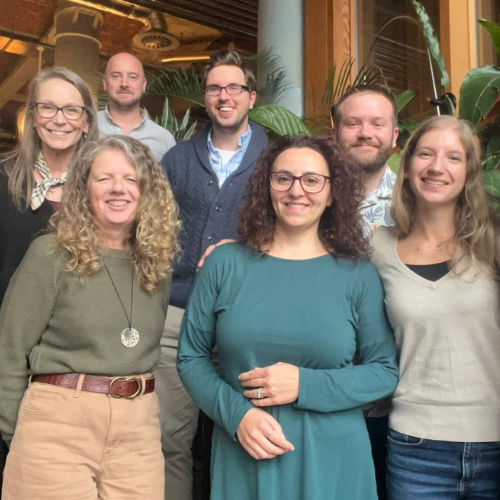
The A-Team (back row: Anna, Jim, Alex, and Rhys; front row: Clare, Steffi, and Joanna)
You can use the live chat button during UK business hours, or click the envelope to leave us a message when we’re not in the office. Plus, you can also use our Get a Quote button at the top of the website for a quick price estimate.
Can I Trust Atlas Translations?
Atlas Translations is certified to ISO 9001:2015 (Quality Management) and ISO 17100:2017 (Translation Services) standards. For confidential projects, we’re happy to sign a non-disclosure agreement (NDA). Registered with the Information Commissioner’s Office (ICO) for over 20 years now, reflecting our long-standing commitment to privacy and data protection.
We’re proud to provide fast, friendly, high-quality services—but don’t just take our word for it. Check out our client testimonials and TrustPilot reviews.
Global Voice, Local Touch
If you’re looking for some top tips for partnering with Atlas Translations, we have some top tips to share! We answer 25 of our clients’ most frequently asked questions, ranging from typesetting queries to discussing reference materials.
Click to download Global Voice, Local Touch