
Posted on25 November 2025
Maltese: Connect Across Cultures Through Our Professional Translation Services

This week, we have a guest post from Rhys Stevenson, one of our talented project managers here at Atlas Translations. Earlier this month, Rhys sought out some sunshine, warmth, and medieval culture on the lovely island of Malta. We have since forgiven Rhys for not inviting us along.
What can we help with today? Call us on +44 (0)1727 812 725 or email us at team@atlas-translations.co.uk! We’re only a call, chat, or email away, and we’re always eager to help!
Guest Blogger: Rhys Stevenson
Recently, I escaped a dark, wintry November at Atlas’ Edinburgh HQ for a few days of holiday in the much warmer and sunnier climes of beautiful Malta.
Learning the Local Lingo
As always, I tried to learn a few pleasantries in the local language before travelling. I often find myself on well-known linguistic ground during a Southern European getaway. I’ve always enjoyed languages and have dabbled in a few Romance languages to varying degrees over the years.
I have to say, at first glance of a few basic phrases in Maltese, I felt on a firm footing. Phrases like ‘Bonġu’ (good morning), ‘Bonswa’ (good evening), and ‘Grazzi’ (thanks) happily built my confidence. Looking further down the list at ‘Jekk jogħġbok’ (please) and ‘Il-lejl it-tajjeb’ (good night), I was soon shaken from my linguistic complacency!
A Linguistic Melting Pot
Maltese is what’s called a ‘hybrid language’. From the Phoenicians to the Moors, and Romans to the Brits, Malta’s long history of foreign rule has certainly left its mark on the nation’s language. Around half of the Maltese vocabulary stems from Italian and Sicilian, with a smattering from English. The other half stems from the Maghrebi Arabic dialects of the island’s North African neighbours. Grammar and syntax are heavily influenced by Arabic, so Maltese is classified as a Semitic language, albeit the only one to use the Latin script.

The above snap of a display board at St. Paul’s Catacombs shows the wonderful amalgam of languages at play in modern Maltese.
Malta’s Multilingual Landscape
Spend a few hours on this island, and you’ll quickly notice that Malta’s linguistic landscape is even more diverse than the Maltese language.
Starting With the Official Languages…
Malta gained its independence from Britain in the 1960s, but English remains a second national language alongside Maltese. The Maltese state education system is fully bilingual to help all generations use and understand both languages.
With bilingual signage (like the example above) everywhere, there is certainly no linguistic barrier for an Anglophone tourist. Although on a personal note, I found the globally known British touchpoints dotted everywhere a little jarring in Mediterranean surroundings. Spotting red telephone boxes, Clarks shoe shops, and one rather conspicuous Early Learning Centre was not on my Bingo card!
And if Two Languages Weren’t Enough…
Due to its history and geographical location, Italian is also widely spoken in Malta. Around two-thirds of the Maltese population (approx. 360,000) now consider themselves fluent. Checks out, as I saw the language everywhere—from product packaging to TV channels. A lazy evening watching ‘Affari tuoi’ (‘Deal or No Deal’) and ‘Ballando con le stelle’ (‘Strictly Come Dancing’) on Italy’s Rai really gave my rusty Italian a good workout!
Key Takeaways for Atlas Translations and Our Clients
So what did I take away from my linguistic adventures in the Med for Atlas and our clients?
Well, apart from a bag of sticky sweets at the duty-free shop for my colleagues…
The People’s Language
Based on my extensive survey (one respondent – a chatty taxi driver!), Maltese is still the language of the heart for its residents. While a tourist can get by using English, an organisation operating in Malta needs to use Maltese if they want to resonate with locals.
Leading by Example in Heritage Accessibility
With my localisation industry hat on, I was really impressed with the number of languages available on audio guides at cultural sites. The Ħaġar Qim Archaeological Site and the Inquisitor’s Palace in Birgu are two of many notable places. Some museums I visited even showed short films in cinemas that were made for multilingual voiceovers! In each case, the film music was played in the auditorium, but the language of the accompanying voiceover could be selected on each individual headset.
This is the sort of set-up I’m familiar with from conference interpreting contexts, but certainly not at museums.
Perhaps thanks to the island’s own multilingualism, it’s clear that the Maltese heritage sector understands the value of translation. Heritage Malta – I salute you for making Malta’s historical treasures accessible to international visitors.
A Personal Recommendation
And finally…
Whether or not Neolithic temples, Caravaggio’s paintings, and rabbit stew are your jam, I can thoroughly recommend Malta as a holiday destination to colleagues and clients alike!

Image description: Photo of our project manager, Rhys, sporting sunglasses and his trademark floral holiday attire, basking in some November sunshine on the ramparts of the medieval city of Birgu with a view of Malta’s capital, Valletta, in the distance.
Thank you, Rhys!
We’d Love to Hear From You!
You can call us on +44 (0)1727 812 725 or email team@atlas-translations.co.uk. We respond quickly to all enquiries and are always happy to chat about your needs.
If you’d like to visit us in person to learn more about our services or to drop off documents, just give us a call or email us to arrange a time.
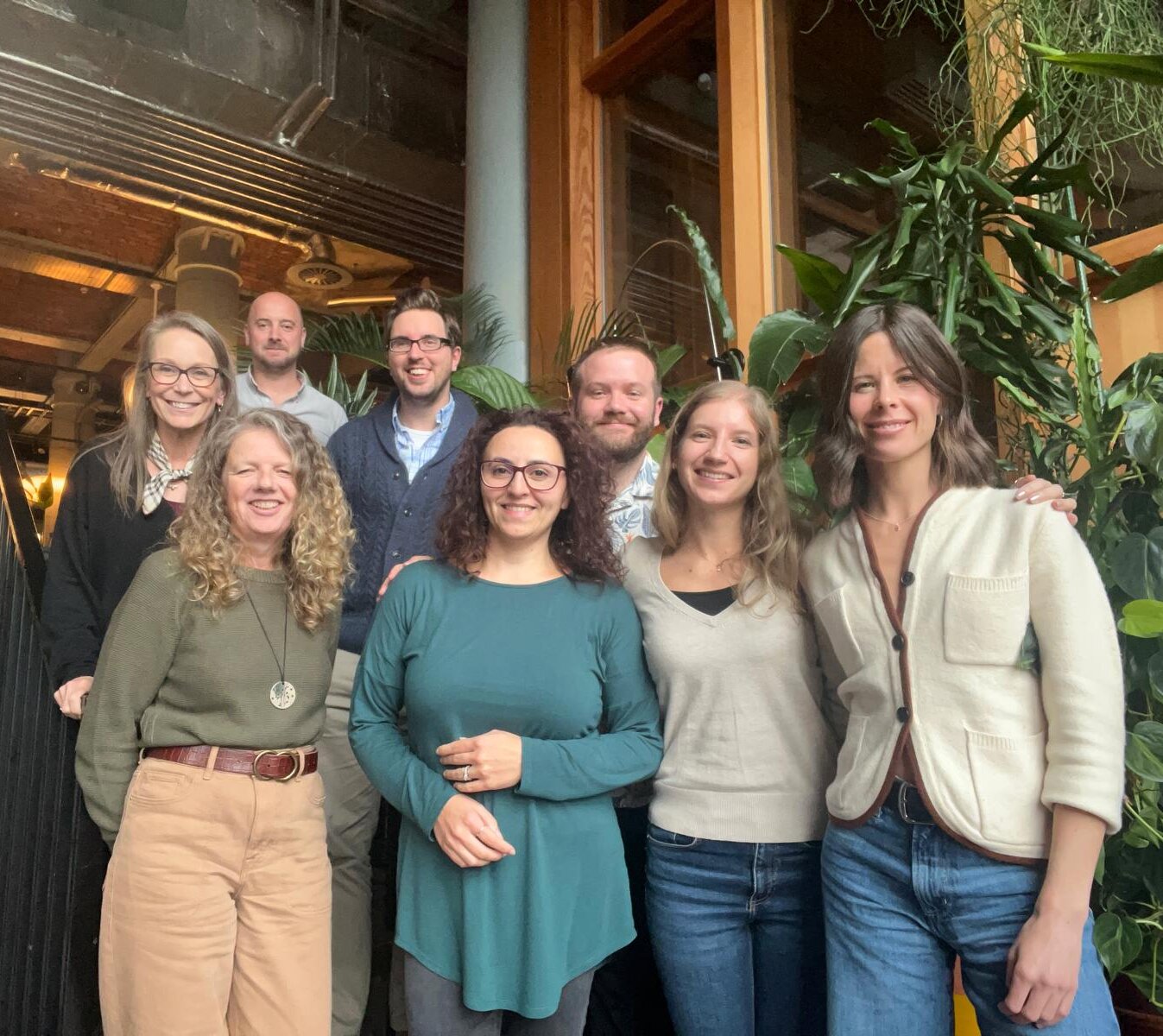
The A-Team (back row: Anna, Jim, Alex, and Rhys; front row: Clare, Steffi, Joanna, and Amy)
During UK working hours, you can also use our Live Chat option (bottom right of your screen). You’ll always be connected with a real person; we’re a bot-free zone!
And if you need a fast estimate, our Get a Quote button at the top of the website makes it easy.
Can I Trust Atlas Translations?
Atlas Translations is certified to ISO 9001:2015 (Quality Management) and ISO 17100:2017 (Translation Services) standards. For confidential projects, we’re happy to sign a non-disclosure agreement (NDA).
We’ve been registered with the Information Commissioner’s Office (ICO) for over 20 years, reflecting our long-standing commitment to privacy and data protection.
We’re proud to provide fast, friendly, high-quality services—but don’t just take our word for it. Check out our client testimonials and TrustPilot reviews.
Global Voice, Local Touch
If you’re looking for some top tips for partnering with Atlas Translations, we have some top tips to share! We answer 25 of our clients’ most frequently asked questions, ranging from typesetting queries to discussing reference materials.
Click to download Global Voice, Local Touch