Afrikaans translation
Similar to Dutch, but not similar enough that you could just use a Dutch translator! Afrikaans translation can help your business reach customers in South Africa, Namibia and beyond.
A young and blended language
Afrikaans is one of the world’s younger languages. 17th-century colonisers from the Netherlands brought Dutch to southern Africa, where it evolved over generations through contact with indigenous Khoisan languages, and others such as Malay and Portuguese. Although around 90% of its vocabulary is of Dutch origin, by the 19th century Afrikaans had become a fully distinct language, and today it is spoken by around 16 to 20 million people.
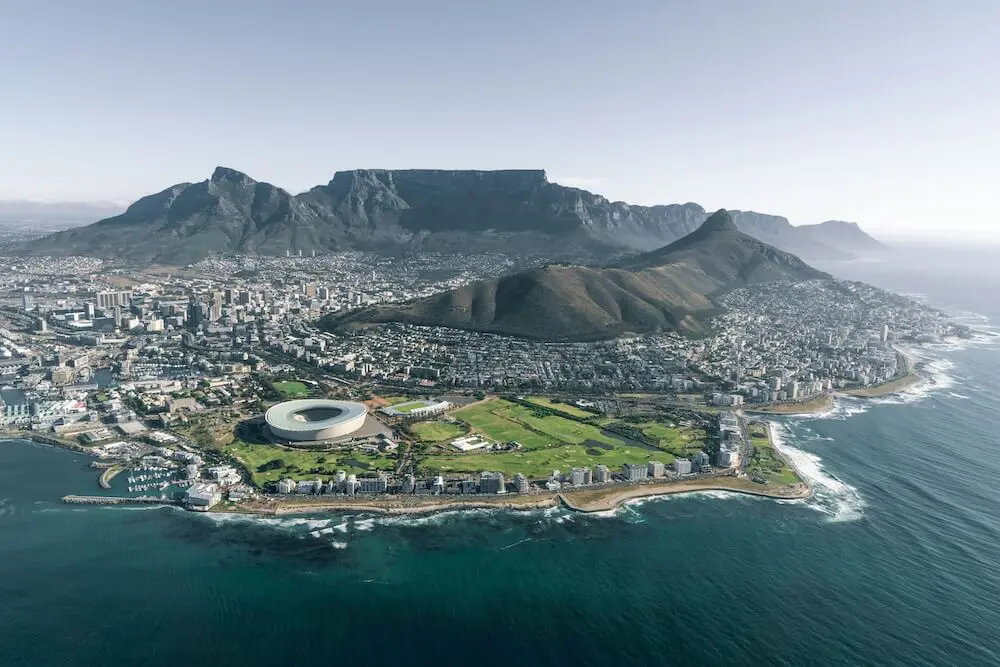
Where Afrikaans is spoken
South Africa is home to the vast majority of Afrikaans speakers, with roughly 7 million people for whom it is a first language, and many millions more who use it as a second or third language in daily life. It is one of South Africa’s 12 official languages and has a particularly strong presence in the Western Cape, Northern Cape, and parts of Gauteng. In post-apartheid South Africa, Afrikaans is not given the preferential treatment by the government that it once had, but it’s still widely used in business, media, education, and public life across the country.
Namibia is the other country where Afrikaans has official status, and it functions as the most widely understood lingua franca in many parts of the country, despite not being the most commonly spoken mother tongue. For businesses operating in Namibia, Afrikaans can be the most practical language for reaching a broad audience.
Botswana, Zimbabwe, and Zambia each have Afrikaans-speaking communities, largely descended from farming families and the South African diaspora. While numbers are smaller, these communities often represent economically active and influential demographics.
The Afrikaans diaspora has also carried the language to the Netherlands, the United Kingdom, Australia, and beyond. South Africans abroad tend to hold onto their language warmly, and Afrikaans-language media, literature, and music continue to thrive far from their origins.
“I am a will writer and had taken will instruction from an elderly lady, who has poor eyesight and limited English skills. Atlas translated the Will I had written into Italian for me, certified the translation and then Visited with me to see my client at her home and read over the Will in Italian so that my client could understand it properly.
This service was so professional, the interpreter was delightful and skilled and my client was happy to sign the Will and I was confident that she completely understood it which is my job. Atlas and Ilenia the interpreter were fantastic and I shall use them again if required.”
Why translate your business materials into Afrikaans?
It shows respect for your audience
The languages people speak are – understandably – closely entwined with identity and history in South Africa. While English is widely understood and used, all 12 languages have equal legal status and your customers will feel seen if you communicate with them in their preferred language.
South African law takes language seriously
The South African Constitution recognises 12 official languages and places obligations on government and businesses to communicate accessibly. In regulated industries such as financial services, healthcare and law, Afrikaans-language documentation is often not optional.
The market is larger than it looks
While first-language Afrikaans speakers number in the millions, Afrikaans functions as a widely understood bridge language across a much larger population in South Africa and Namibia. Material translated into Afrikaans has a meaningful reach well beyond those for whom it is their mother tongue.
Namibia is an often-overlooked opportunity
Namibia is a stable, well-governed country with a growing economy, significant natural resources, and a business environment that international companies find attractive. Afrikaans is your most reliable way in.

Key industries in Afrikaans-speaking countries
Southern Africa’s economy is rich and varied, and Afrikaans-speaking communities are active across many of its most significant sectors.
Mining and natural resources
South Africa and Namibia sit atop some of the world’s most extraordinary mineral wealth: gold, diamonds, platinum, chrome, and uranium among them. This is a highly technical industry with extensive documentation needs, from environmental impact reports to safety protocols and supply contracts, and getting the language right really matters.
Agriculture and food production
Afrikaans-speaking farming communities have shaped South African and Namibian agriculture for centuries. The region is a significant exporter of wine (particularly from the Western Cape), citrus, stone fruit, wool, and beef. Export documentation, labelling, and trade communications can require Afrikaans alongside English.
Financial services
South Africa has the most developed financial sector on the African continent, with major banks, insurers, and asset managers headquartered in Johannesburg and Cape Town. Many of these institutions serve Afrikaans-speaking clients and are required by law to communicate in accessible, plain-language Afrikaans.
Retail and consumer goods
South Africa’s consumer market is large, sophisticated, and competitive. Major retailers and brands investing in the South African market know that connecting with Afrikaans-speaking consumers in their own language builds genuine loyalty.
Energy and infrastructure
With South Africa’s ongoing energy challenges and major investment in renewable infrastructure, the sector generates a significant volume of technical, regulatory, and public-facing documentation.
Healthcare and pharmaceuticals
Patient communication, clinical documentation, and pharmaceutical labelling all carry legal and ethical obligations around language access. In South Africa, providing healthcare information in a patient’s preferred language is essential.
Tourism and hospitality
Southern Africa is one of the world’s most spectacular tourism destinations. From the Kruger National Park to the Namibian desert, the region draws visitors from across the globe, and its hospitality industry is a significant employer and economic contributor.
Did you know…
Is Afrikaans the same as Dutch?
While it shares a lot of vocabulary with Dutch, Afrikaans is a distinct language. There is some mutual intelligibility (speakers of one can understand speakers of the other), but Dutch speakers may more readily understand Afrikaans than the other way round. So you can’t get away with using the same translator you used when you exported to the Netherlands! There are also regional and social differences in the way the language is used, which is something automated tools or non-native translators may get wrong.
Yes or no?
Afrikaans speakers may start an answer to a question by saying ‘je nee’ which means ‘yes no’. This doesn’t necessarily mean they’re agreeing – or disagreeing! – with you. It’s a colloquial part of speech that can sometimes mean agreement, sometimes acknowledging there is some doubt or complexity but often is just a habitual way to begin a sentence.
South Africa to South America
It seems obvious that you’ll find Afrikaans in Namibia and Botswana, as they’re right next door to South Africa. But there are a small number of speakers all the way over in Argentina. They’re the descendants of settlers who travelled from South Africa to Patagonia in the early 20th century, after the second Anglo-Boer War. Today this population is around 1000, though only a minority speak Afrikaans.

Why trust Atlas with your Afrikaans translation?
Atlas has been working with specialist translators for over 35 years. Afrikaans is one of the languages where we have built real, tested expertise, and here is what that means in practice.
Qualified, hand-selected human translators
Every Afrikaans project is handled by a native speaker who lives and works in the language daily. Not a machine, not a generalist, not someone who studied a related language and hopes for the best. Afrikaans may share roots with Dutch, but it is emphatically its own language, and inexperienced translators or automated tools produce text that feels stilted and wrong to a native reader. We do not cut those corners.
Dedicated project management
Every job at Atlas is led by a named project manager: a real person who is responsible for your work from first conversation to final delivery, who knows your project, and who you can actually call if something comes up. No anonymous portals, no automated pipelines, no wondering where your translation has gone.
ISO-certified quality
Atlas holds ISO 9001:2015 (Quality Management) and ISO 17100:2017 (Translation Services) certifications, and we were one of the first UK translation companies to achieve ISO 17100. These are not just certificates on a wall. They represent a consistent, documented approach to quality that clients in regulated industries often specifically require.
Sector expertise that matches your needs
Whether you need mining documentation, financial services communications for South African consumers, healthcare materials, agricultural export paperwork, or consumer content for the Afrikaans-speaking retail market, we match your project to a translator who genuinely knows the field, not just the language.
An agency you can trust with sensitive work
Atlas is Cyber Essentials certified, registered with the ICO, and a member of the Institute of Translation and Interpreting, the Chartered Institute of Editing and Proofreading, and the Association of Translation Companies. If you are working in healthcare, legal, or financial services, where the stakes of a mistranslation are high, these things matter.
Why trust Atlas Translations?


Read more about our commitment to quality
Certified translations by certified humans
Frequently asked questions
How much does Afrikaans translation cost?
Projects vary in need, length, and complexity. If you’re interested in our services and need a fast cost estimate, use our price calculator. Alternatively, you can request a quote or call us to talk it through on 01727 812 725.
How long does it take?
How long is a piece of string? It really depends.
It’s best to give us a call on 01727 812 725 to discuss your project and we can give you a more precise timeframe. We are known for our speedy turnarounds, though…
Do you work with any language?
Looking for more than just Afrikaans?
We are confident that we have your needed language covered. From American English to Zulu, we’ve worked on more than 340 languages since 1991, including Latin and Ancient Greek. Read more about the languages we offer.
How do I know I can trust Atlas Translations?
Atlas Translations holds two ISO certifications — ISO 9001:2015 (Quality Management) and ISO 17100:2017 (Translation Services). If the project is confidential, we can sign NDAs for extra peace of mind.
Are you wondering if we’re up to date on privacy? We registered with the Information Commissioner’s Office (ICO) over twenty years ago, and we have always prioritised data protection.
Rad more about our commitment to quality.
Atlas Translations are here to support you. Whether you’re an individual, a SME or a multinational corporation, we can help.
Need an Afrikaans translation?
Email us on team@atlas-translations.co.uk
Call us on 01727 812 725
Tell us some details and get a quote
Use the chatbox to start a conversation. It’s a real-life human, no bots here! (During UK business hours – we do need to sleep.)
See more options on our contact page.