
Posted on28 April 2026
From the Catwalk to the Checkout Counter: Why Brand Voice Matters in Fashion, Retail, and Cosmetics Translation

Your brand has a personality. It took years to build, a lot of effort to articulate, and a careful team to keep consistent. So the last thing you want is for it to fall apart the moment it crosses a border.
For fashion, retail, and cosmetics brands, language is as important as looks; it’s integral to the product. The way you describe a lipstick shade, the tone behind a new collection launch, the personality woven into your packaging copy. These things are doing real commercial work. Customers feel them. And when they go wrong, customers feel that too.
What can we help with today? Call us on +44 (0)1727 812 725 or email us at team@atlas-translations.co.uk – we’re only a call, chat, or email away, and we’re always happy to help!
When “Effortless Chic” Becomes Something Else Entirely
Translation errors in fashion and cosmetics are not just awkward, they’re downright expensive. A product description that reads flat, or worse, says something unintended, can quietly erode the trust a brand has spent years building.
The scenarios play out more often than you might think. A luxury brand expands into a new market with packaging copy that is technically correct but sounds off. Before you know it, the warmth and aspiration that made the product desirable at home simply do not come across. A cosmetics company relies on machine translation for its e-commerce listings and ends up with product names that sound clinical rather than enticing. A fashion retailer’s campaign tagline gets translated word-for-word and loses all its wit in the process.
These are not fringe situations. They happen regularly, and the common thread is treating translation as a simple word-swap exercise rather than the creative and cultural process it actually is.
The Problem With “Close Enough”
Machine translation has come a long way. For internal communications or straightforward documents, it can be genuinely useful. But fashion, retail and cosmetics content is a different beast entirely.
Brand voice gets lost in translation
Brand voice has texture. It carries humour, aspiration, warmth, and authority; often all at once. Automated tools are getting better at translating meaning, but they are not yet reliably translating feeling. A French customer browsing a luxury skincare range expects copy that sounds like it was written for them, not processed by an algorithm and hoping for the best.
Culture is not a word-for-word exercise
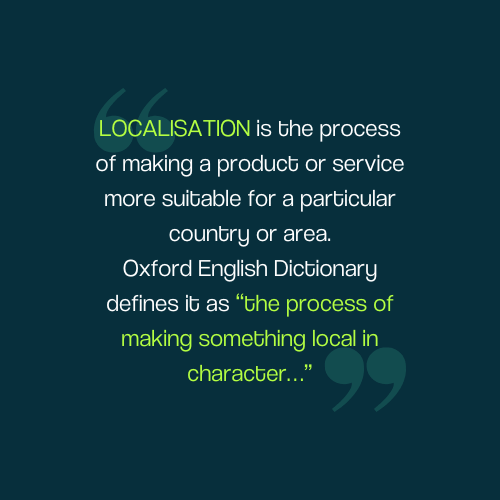
Cultural relevance is another layer entirely. What resonates with shoppers in London isn’t necessarily what lands in Los Angeles or Lahore. References, idioms, colour associations, and even product naming conventions vary enormously across markets. Professional retail localisation accounts for all of this. Machine translation, by definition, cannot.
What Good Actually Looks Like
Professional fashion translation and cosmetics translation are collaborative, multi-stage processes. It involves linguists who understand not just the language, but the culture, shopping habits, and expectations of consumers in that specific market.
A rigorous quality process
At Atlas Translations, every retail or cosmetics translation project goes through four stages of checks and edits before it reaches the client. A specialist linguist completes the initial translation (always working into their native language) and a second, equally qualified linguist proofreads and refines the work. An in-house quality check then makes sure the final version meets the client’s standards.
Linguists who know the sector
The linguists themselves are chosen for sector expertise, not just language fluency. That matters more than it might seem. Fashion and cosmetics have their own vocabulary: specific materials, finishes, trends, and product categories, to name a few. A translator who actually knows the difference between a matte bronzing powder and an illuminating highlighter (yes, they’re very different) will produce very different copy from one who does not.
Coverage across content types and markets
Atlas works with clients across the full spectrum of these sectors, from jewellery makers and luxury handbag brands to cosmetics and fragrance companies. Let’s not forget footwear designers, haircare product manufacturers, and major retail chains. The content types covered are just as varied: product listings, catalogues, packaging and labelling, e-commerce pages, point-of-sale displays, contracts, advertising campaigns, and even live interpreting at brand launches, fashion shows, and conferences.
With our experience working in 300 languages, there are very few markets we cannot reach.
Why It Matters More Than Ever
International e-commerce has made it easier than ever for fashion and cosmetics brands to reach new customers worldwide. But easier access does not mean automatic success. Shoppers in every market have high expectations and plenty of alternatives. If your localised content doesn’t feel right (i.e., if it reads as translated rather than written), you’re handing potential customers a reason to look elsewhere.
The brands that get international expansion right tend to treat language as part of the brand experience, not an afterthought. Investing in professional retail localisation from the start is considerably less costly than trying to unpick a reputational problem further down the line.
Ready to Take Your Brand Global?
At Atlas Translations, we work with fashion, retail and cosmetics brands that understand that brand voice does not stop at the border. Whether you are expanding into new markets for the first time or looking to improve translations that are not quite landing as intended, we can help.
Find out more about our localisation services or visit our dedicated fashion, clothing, cosmetics and retail translation page to see how we work. You can also call us on +44 (0)1727 812 725 or email us at team@atlas-translations.co.uk — we respond quickly to all enquiries!
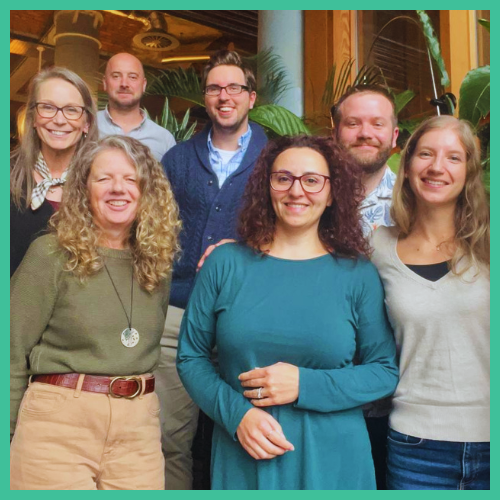
The A-Team (back row: Anna, Jim, Alex, and Rhys; front row: Clare, Steffi, and Joanna)
You can use the live chat button during UK business hours, or click the envelope to leave us a message when we’re not in the office. Plus, you can also use our Get a Quote button at the top of the website for a quick price estimate.
Can I Trust Atlas Translations?
Atlas Translations is certified to ISO 9001:2015 (Quality Management) and ISO 17100:2017 (Translation Services) standards. For confidential projects, we’re happy to sign a non-disclosure agreement (NDA). Registered with the Information Commissioner’s Office (ICO) for over 20 years now, reflecting our long-standing commitment to privacy and data protection.
We’re proud to provide fast, friendly, high-quality services—but don’t just take our word for it. Check out our client testimonials and TrustPilot reviews.
Global Voice, Local Touch
If you’re looking for some top tips for partnering with Atlas Translations, we have some top tips to share! We answer 25 of our clients’ most frequently asked questions, ranging from typesetting queries to discussing reference materials.
Click to download Global Voice, Local Touch