
Posted on24 February 2026
Buried Beneath the Search Results Summary: The Growing Risk to Multilingual Health Information

Cast your mind back to when a Google search felt straightforward. You’d type in a question, and a neat list of official websites would appear. Up pops recognised global health organisations, NHS website pages, and other trusted medical sources. You’d click, you’d read, and you’d feel reasonably confident in what you’d found. These days, the experience looks quite different. First comes an AI-generated overview, summarising increasingly sketchy information from sources you can’t immediately verify. Then the sponsored entries. Then, finally, the official websites you were looking for in the first place.
For most English-speaking users, this shift in content generation is best navigated with caution. For the growing number of people who rely on translated health content, it can be genuinely dangerous.
What can we help with today? Call us on +44 (0)1727 812 725 or email us at team@atlas-translations.co.uk – we’re only a call, chat, or email away, and we’re always eager to help!
The reliability of online health information is in the spotlight right now. Organisations like the Patient Information Forum (PIF) are raising concerns about the quality of content available from sources that patients and healthcare professionals have long trusted. At the same time, AI-generated search overviews are presenting health summaries with an enviable air of authority. Unfortunately, it doesn’t always reflect the accuracy of the referenced information. Experts, including patient information specialists, have called for clearer disclaimers and greater transparency around how this content is generated and verified.
When Reliable Sources Disappear, the Language Gap Widens
People who access health information in languages other than English already have fewer resources. Multilingual health information, when it exists at all, is often produced in smaller quantities, updated less frequently, and distributed through fewer channels. When authoritative English-language content is reduced in quality or availability, translated versions are rarely prioritised for correction or replacement.
The result is a compounding problem. Non-English speakers may find themselves relying on outdated patient information translation or poorly localised content. Increasingly popular is machine-translated text that has never been reviewed by a qualified human linguist. In a healthcare context, the consequences of mistranslation aren’t difficult to understand. Misunderstanding dosages or contraindications, plus confusion around treatment paths are all real risks when translated health content falls short of the mark.
It’s worth noting that PIF, recognising the importance of reaching diverse communities, has made its own guide on navigating AI health searches available in five languages, including Arabic, Urdu, and Punjabi. That’s an encouraging example of what thoughtful, inclusive health communication looks like in practice. The challenge is making that approach the norm, not the exception.
Quality in Medical Translation Services Should Be Non-Negotiable
This is where the conversation moves from problem to solution, and where the expertise of a specialist healthcare translation agency becomes particularly valuable.
Accurate medical translation isn’t something that can be left to chance. Any language professional should refuse to rely on tools that haven’t been designed with the complexity of healthcare language in mind. Generic AI translation platforms can handle everyday, conversational content reasonably well, but medical and pharmaceutical translation demands something more. Terminology must be precise. Cultural context must be considered. Regulatory requirements must be met. And crucially, the end reader, often a patient with limited health literacy in any language, must be able to understand what they’re reading clearly and without ambiguity.
How Atlas Translations Upholds the Standard
At Atlas Translations, every medical translation project is assigned to a linguist with verified, sector-specific expertise. Our translators work exclusively into their native language. This means they bring not just technical knowledge but genuine cultural and linguistic fluency to the content they handle. As we’re ISO 17100 certified, all translations intended for publication are proofread by a second qualified native linguist. In healthcare information, a second pair of expert eyes is a responsibility.
This approach to pharmaceutical translation and patient-facing content means that when health information reaches a reader in another language, it carries the same integrity as the original. That’s the benchmark every piece of multilingual health information should be held to.
It’s a Wrap!
The current conversation around health information quality is more timely than ever. It’s a reminder that the systems we rely on to communicate medical knowledge are more fragile than they might appear. For healthcare organisations and communications agencies, this is a great time to reflect on the standards applied to multilingual content. Are they necessary, are they enough, and are they truly fit for purpose?
Patients searching for health information in Arabic, Acehnese, or Punjabi to Polish deserve the same accuracy and clarity as those reading in English. Achieving that requires more than good intentions. It requires specialist knowledge, rigorous processes, and a translation partner who understands what’s at stake.
If you’re reviewing the quality of your multilingual health content, or looking for a medical translation services partner you can rely on, we’d love to hear from you. Get in touch with the Atlas Translations team today. We’re here to help, and we’re very nice people!
We’d Love to Hear From You!
You can call us on +44 (0)1727 812 725 or email team@atlas-translations.co.uk. We respond quickly to all enquiries and are always happy to chat about your needs.
If you’d like to visit us in person to learn more about our services or to drop off documents, just give us a call or email us to arrange a time.
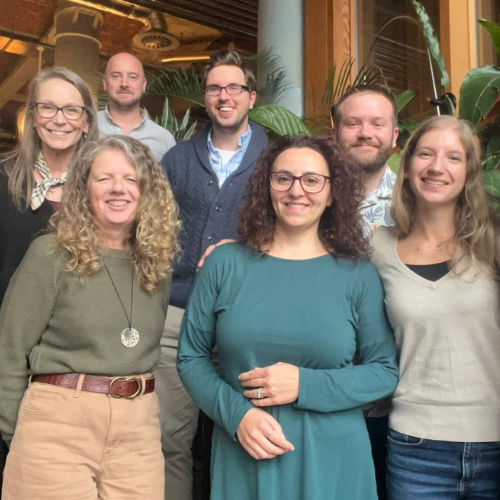
The A-Team (back row: Anna, Jim, Alex, and Rhys; front row: Clare, Steffi, and Joanna)
You can use the live chat button during UK business hours, or leave us a message outside of business hours. Plus, you can also click the Get a Quote button at the top of the website for a quick price estimate.
Can I Trust Atlas Translations?
Atlas Translations is certified to ISO 9001:2015 (Quality Management) and ISO 17100:2017 (Translation Services) standards. For confidential projects, we’re happy to sign a non-disclosure agreement (NDA). Registered with the Information Commissioner’s Office (ICO) for over 20 years now, reflecting our long-standing commitment to privacy and data protection.
We’re proud to provide fast, friendly, high-quality services—but don’t just take our word for it. Check out our client testimonials and TrustPilot reviews.
Global Voice, Local Touch
If you’re looking for some top tips for partnering with Atlas Translations, we have some top tips to share! We answer 25 of our clients’ most frequently asked questions, ranging from typesetting queries to discussing reference materials.
Click to download Global Voice, Local Touch
Any em-dashes, rocket emojis, or instances of ellipses abuse are 100% intended by the author (that’s me, 👋) and are not the by-product of AI. If the em-dash is good enough for Ann Handley—it’s good enough for all of us 🚀