French translation
French is one of the world’s truly global languages: spoken on every continent and carrying with it a rich cultural, diplomatic, and commercial heritage that makes it essential for businesses with international ambitions.
The global reach of French
With approximately 320 million speakers worldwide, French ranks among the top five most widely spoken languages on the planet. Crucially, it is an official language in 29 countries, giving it a geographic spread that few languages can match. The Organisation Internationale de la Francophonie projects that this number could rise to over 700 million speakers by 2050, driven largely by rapid population growth across French-speaking Africa.
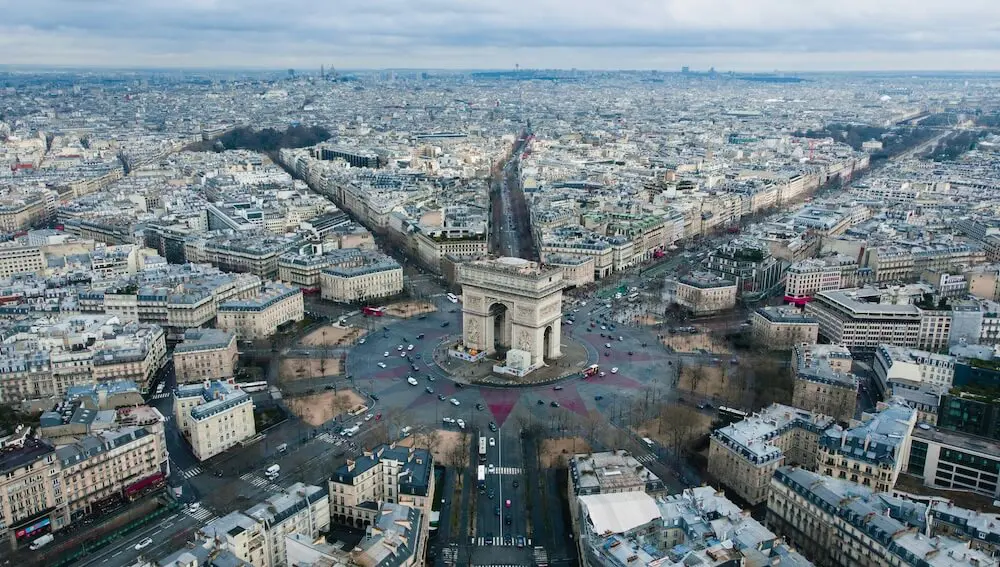
Where French is spoken
France sits at the heart of the Francophone world, with around 68 million speakers. As one of the world’s largest economies and a founding member of the European Union, France remains the primary market for businesses targeting French-speaking consumers.
The Democratic Republic of Congo (DRC) is home to the world’s second-largest French-speaking population (over 50 million people) and is increasingly significant as its economy develops and urbanises.
Canada has approximately 10 million French speakers, concentrated primarily in Québec, where French is the sole official language, but also present in New Brunswick, Ontario, and Manitoba. Canadian French has its own distinct character, and businesses entering the Canadian market are strongly advised to use locally adapted translations.
Belgium has around 4.5 million French speakers, primarily in the Wallonia region and the capital, Brussels, which also serves as the de facto capital of the European Union and NATO, making it a hub of international affairs.
Switzerland has approximately 2 million French speakers, concentrated in the western “Romandy” region. Swiss French carries its own vocabulary and conventions, particularly in professional and formal contexts.
Morocco, Algeria, and Tunisia together account for tens of millions of French speakers across North Africa: a region with fast-growing consumer markets and deep economic ties to Europe.
West and Central Africa, including Côte d’Ivoire, Senegal, Cameroon, and a dozen other nations, is home to hundreds of millions of French speakers and represents one of the world’s most dynamic emerging market regions.
“I am a will writer and had taken will instruction from an elderly lady, who has poor eyesight and limited English skills. Atlas translated the Will I had written into Italian for me, certified the translation and then Visited with me to see my client at her home and read over the Will in Italian so that my client could understand it properly.
This service was so professional, the interpreter was delightful and skilled and my client was happy to sign the Will and I was confident that she completely understood it which is my job. Atlas and Ilenia the interpreter were fantastic and I shall use them again if required.”
Key industries in French-speaking countries
Luxury goods and fashion
France is the undisputed global capital of luxury, home to groups like Givenchy, Yves Saint Laurent, and Celine. Any brand operating in the premium fashion space needs flawless French-language communication.
Aerospace and defence
France hosts world-leading firms including Airbus, Thales, and Dassault. The sector produces highly technical documentation that demands precise, specialist translation.
Pharmaceuticals & life sciences
France, Belgium, and Switzerland all have thriving pharmaceutical sectors, with companies such as Sanofi, UCB, and Novartis requiring rigorous regulatory and clinical translations.
Financial services and banking
Switzerland is a global centre of private banking and wealth management, while Paris is one of Europe’s premier financial hubs. Belgium hosts the headquarters of numerous EU financial institutions.
Agriculture, food and wine
France is one of the world’s largest agricultural exporters, and its wine, cheese, and gourmet food industries have global audiences that expect communication in their own language.
Energy and natural resources
The DRC holds extraordinary mineral wealth, while Francophone West Africa has significant oil, gas, and mining sectors. As international investment in these regions grows, so does the need for French-language commercial and legal documentation.
Tourism and hospitality
France is consistently the world’s most-visited country, with 102 million foreign tourists visiting in 2025. The hospitality sector relies heavily on multilingual content to serve international guests.

Why translate your business text into French?
Access a vast, multilingual consumer base
With over 320 million speakers across Europe, North America, Africa, and beyond, French opens doors to a remarkably diverse global audience.
Meet legal and regulatory requirements
In Québec, the Charter of the French Language (known as Bill 101) legally requires that commercial signage, product labelling, and consumer contracts be available in French. Businesses selling into France and Belgium must also comply with EU consumer protection regulations that mandate clear, accessible information in the local language.
Build trust with your audience
Research consistently shows that consumers are significantly more likely to purchase from, and remain loyal to, businesses that communicate with them in their native language. A professionally translated website or brochure signals respect and commitment to French-speaking customers.
Gain a competitive edge
Many businesses overlook Francophone Africa entirely, yet the region’s emerging middle class represents one of the fastest-growing consumer opportunities in the world. Early, well-localised entry can establish lasting brand recognition.
Strengthen your European presence
With Brussels at the centre of EU policymaking and French functioning as one of the EU’s three working languages, French-language capability is effectively a prerequisite for any serious engagement with European institutions and multinational organisations.
Support diplomatic and NGO work
French is one of the six official languages of the United Nations and the working language of the International Committee of the Red Cross. Organisations operating in international development, diplomacy, or humanitarian fields will almost certainly require high-quality French translation.
Did you know…
French in English
It’s estimated that around a third of English words are of French origin, thanks to lots of contact (both friendly and unfriendly!) between the neighbouring countries throughout history. A significant point was the invasion of William the Conqueror in 1066, bringing Normal French to England, which then became the language of the court and upper-classes.
Ordinary people continued to use Old English, but more and more French words were borrowed. This is why English has lots of pairs of words meaning the same or similar thing, each from a different origin: cemetery (French) and graveyard (English); serpent (French) and snake (English); revenue (French) and income (English).
Some things can’t be translated
Some examples of idiomatic French phrases, unique to the language:
Passer du coq à l’âne: to change topics without logic in a conversation or radically change of activity. Literal translation: To go from the cock to the donkey.
Donner sa langue au chat: when you have no clue about something or you give up on a riddle for instance. Literal translation: to give one’s tongue to the cat.
Empêchement: when you have an unexpected change in your agenda and cannot go where you firstly planned to go.
Why choose Atlas for French translation?
At Atlas, we work exclusively with native-speaking French translators who combine linguistic fluency with deep subject-matter expertise. Whether you need a legal contract translated for the Swiss market, marketing copy adapted for Québec, or technical documentation for an Anglophone African operation, we match your project to a translator who knows your industry and your audience.
We also understand that French is not one language — it is many. The French spoken in Paris, Montreal, Dakar, and Brussels each carries its own vocabulary, idiom, and register. Our localisation process ensures your content feels natural and authoritative wherever it is read.
Why trust Atlas Translations?



Read more about our commitment to quality
Certified translations by certified humans

Frequently asked questions
How much does French translation cost?
Projects vary in need, length, and complexity. If you’re interested in our services and need a fast cost estimate, use our price calculator. Alternatively, you can request a quote or call us to talk it through on 01727 812 725.
How long does it take?
How long is a piece of string? It really depends.
It’s best to give us a call on 01727 812 725 to discuss your project and we can give you a more precise timeframe. We are known for our speedy turnarounds, though…
Do you work with any language?
Looking for more than just French?
We are confident that we have your needed language covered. From American English to Zulu, we’ve worked on more than 340 languages since 1991, including Latin and Ancient Greek. Read more about the languages we offer.
How do I know I can trust Atlas Translations?
Atlas Translations holds two ISO certifications — ISO 9001:2015 (Quality Management) and ISO 17100:2017 (Translation Services). If the project is confidential, we can sign NDAs for extra peace of mind.
Are you wondering if we’re up to date on privacy? We registered with the Information Commissioner’s Office (ICO) over twenty years ago, and we have always prioritised data protection.
Rad more about our commitment to quality.
Atlas Translations are here to support you. Whether you’re an individual, a SME or a multinational corporation, we can help.
Need a French translation?
Email us on team@atlas-translations.co.uk
Call us on 01727 812 725
Tell us some details and get a quote
Use the chatbox to start a conversation. It’s a real-life human, no bots here! (During UK business hours – we do need to sleep.)
See more options on our contact page.