German translation
German is one of the most important languages in international business. With around 95 million native speakers across Germany, Austria, Switzerland and smaller communities across Europe, it is the most widely spoken native language in the European Union. Germany has the largest economy in Europe, Austria is a prosperous and internationally connected economy in its own right, and Switzerland, where German is the majority language, is a global centre of finance, pharmaceuticals and precision engineering.
A language of reach, rigour and range
German is a West Germanic language, closely related to Dutch and English. It is spoken by around 130 million people in total when second-language speakers are included, and it is one of the most widely studied foreign languages in the world. Its reputation for complexity, with long compound nouns, four cases, three genders and verbs sent to the end of subordinate clauses, is not entirely undeserved, but it can obscure what German is: a language of extraordinary precision, capable of fine distinctions of meaning. It has given the world Weltanschauung, Schadenfreude, Zeitgeist and Angst, words other languages borrowed because nothing else quite captures the concept.
German also has an intellectual tradition of towering significance. Goethe, Schiller, Kafka, Brecht and Mann, and philosophers such as Kant, Hegel and Nietzsche, shaped Western culture, and for much of the 19th and early 20th centuries German was the primary language of international scientific publication. That heritage still shapes how German is used in formal, academic and professional contexts.
Germany, Austria and Switzerland
German is an official language in Germany, Austria, Switzerland and Liechtenstein, and each has its own variety that matters for professional translation.
German in Germany
The reference standard for most international business translation, and the variety most learners study, is direct, precise and in professional contexts often notably more formal than English business communication.
Austrian German
Austrian German has its own vocabulary, idioms and register conventions. Legal and official Austrian German in particular has terms with no direct equivalent in Germany, a legacy of Austria’s distinct legal tradition, so consumer-facing content for Austria should be adapted rather than assumed to work.
Swiss German
In writing, Swiss professionals use Standard German, not the Swiss German dialects, which are mainly spoken. Swiss written German has its own vocabulary preferences, does not use the letter ß (it uses ss throughout) and has a more formal and understated register. Switzerland’s multilingualism also means business communications often need to work across French and Italian too.
For any project targeting a specific German-speaking country, you tell us which variety is needed and we match you with a translator at home in it.
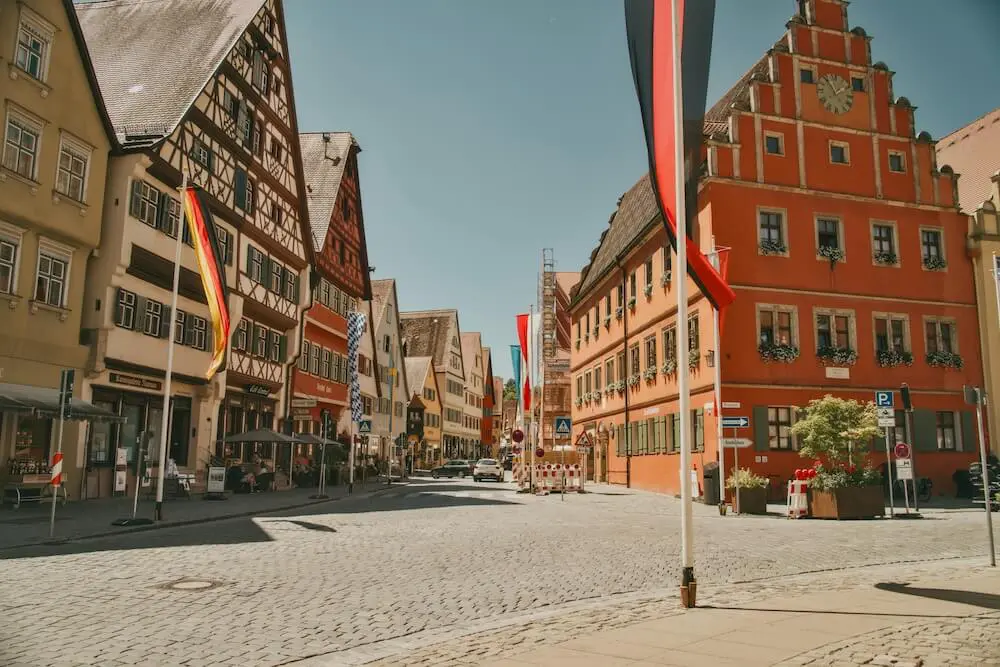
Key industries in German-speaking markets
Automotive
Volkswagen, BMW, Mercedes-Benz, Porsche and Audi anchor a supply chain involving thousands of component manufacturers across Germany and beyond. Technical specifications, quality management, safety standards, supplier contracts and homologation documentation are enormous in volume and exacting in standard.
Engineering and machinery
German engineering is embodied in the Mittelstand, the thousands of mid-sized, often family-owned specialist manufacturers that form the backbone of the industrial economy and export to every corner of the world.
Chemicals and pharmaceuticals
Germany is home to BASF, the world’s largest chemical company, as well as Bayer, Merck and Boehringer Ingelheim, and Switzerland hosts Novartis and Roche. This is among the most translation-intensive sectors in existence, with regulatory submissions, clinical documentation, safety data sheets and patient information all requiring precise translation.
Financial services
Frankfurt is Germany’s financial capital and the seat of the European Central Bank, Switzerland’s banking sector is a global force in private banking, and Austria’s institutions serve domestic and Central European markets.
Technology and software
Berlin has emerged as a major European startup hub, and SAP and Infineon are German. The sector generates software localisation, product documentation and business communication needs.
Energy
Germany’s Energiewende, its transition from fossil fuels and nuclear power towards renewables, has created an ecosystem of companies working in wind, solar, grid management and storage, with large and growing documentation needs.
Legal and professional services
Germany and Switzerland both have large, internationally active legal sectors. German law is influential across Central and Eastern Europe, and legal translation is a specialised and demanding field.
Media, publishing and education
Germany is one of the world’s most significant book markets by revenue, and German-language academic and scientific publishing retains considerable international prestige.
“I am a will writer and had taken will instruction from an elderly lady, who has poor eyesight and limited English skills. Atlas translated the Will I had written into Italian for me, certified the translation and then Visited with me to see my client at her home and read over the Will in Italian so that my client could understand it properly.
This service was so professional, the interpreter was delightful and skilled and my client was happy to sign the Will and I was confident that she completely understood it which is my job. Atlas and Ilenia the interpreter were fantastic and I shall use them again if required.”

Why translate your business materials into German?
It is the EU’s most spoken native language
With 95 million native speakers, German has more native speakers in the EU than any other language. For any business with serious European ambitions, German translation is a key investment.
The German market expects German
Unlike some high-English-proficiency markets, the German business and consumer market clearly expects German-language legal documents, contracts, product information and marketing. Materials that do not meet this expectation signal a lack of commitment.
Legal requirements are robust and enforced
Consumer protection law, financial regulation, pharmaceutical legislation and employment law in Germany, Austria and Switzerland all impose German-language requirements.
Mittelstand relationships are built on precision and trust
German business culture values thoroughness and accuracy. Precisely translated materials signal the professionalism German partners expect, and sloppy translation damages credibility in ways that are hard to repair.
Austria and Switzerland are distinct markets
Each has its own legal system, consumer culture and language conventions. Treating the German-speaking world as a single market will miss the mark in Vienna and Zurich.
Automotive and engineering supply chains make German practically unavoidable
If your business has any relationship with German automotive or industrial supply chains, German technical documentation is a working necessity.
Getting German right
The compound noun system, the case system, grammatical gender and verb-final word order in subordinate clauses all demand real fluency. German professional communication tends to be more formal than its English equivalent, and conventions vary between Germany, Austria and Switzerland. Business letters and legal documents follow established formulas, and deviating from them, even grammatically, can make a document feel amateurish.
Machine translation performs reasonably well with German, but the precision German readers expect means the subtle errors it introduces are particularly costly.
Layout and typesetting with German translation
German is a very creative language. One special feature being the ability to create new words by joining two or more words together, to make a more descriptive (and longer!) word. For example, Donaudampfschifffahrtsgesellschaftskapitänswitwe (widow of a skipper of the Danube shipping company).
It’s this that makes German one of the few languages which employs fewer words in writing than English. Being a UK based translation agency we’re acutely aware of this when it comes to translation into German. We are accustomed to English word counts being lower than the language the text is being translated into/from, but not with German.
Another thing to bear in mind is that there is one more letter in the German alphabet than the English. This letter is the ß or the ‘double s’. The only diacritical marks used in German are the umlaut marks (ä, ö, ü).
Our knowledge of these quirks and our expertise with desktop publishing and typesetting means we can get your material looking right as well as sounding right.
Why trust Atlas with your German translation?
Germany, Austria and Switzerland, all handled correctly
We always establish which market you are targeting and match your project to a translator native to that context. The three varieties are not interchangeable, and we never treat them as if they are.
Native speakers with deep sector expertise
Automotive, engineering, pharmaceuticals, financial services, legal and technology all have translators with real subject-matter knowledge, matched on subject as well as regional variety.
Human translation, always
Every German project is handled by a real person who is a native speaker of the language, with no automated shortcuts.
A named project manager on every job
Every German project has a dedicated project manager responsible for quality and delivery, who understands the expectations of German-speaking markets. German business culture values thoroughness and professionalism, and our approach is designed to deliver both.
ISO-certified quality
Atlas holds ISO 9001:2015 (Quality Management) and ISO 17100:2017 (Translation Services) certifications, and was one of the first UK translation agencies to achieve the latter. These apply fully to German, including in the pharmaceutical, financial, legal and consumer sectors where German-language compliance is required.
35 years of experience
From multinational automotive companies to NHS organisations to individuals needing certified documents, we bring the same care to every German project. Our Google and Trustpilot reviews reflect what clients tell us: that the quality and the people are both worth coming back for. If you have a German project to discuss, we would very much like to hear from you.
Why trust Atlas Translations?


Read more about our commitment to quality
Certified translations by certified humans
Frequently asked questions
How much does German translation cost?
Projects vary in need, length, and complexity. If you’re interested in our services and need a fast cost estimate, use our price calculator. Alternatively, you can request a quote or call us to talk it through on 01727 812 725.
How long does it take?
How long is a piece of string? It really depends.
It’s best to give us a call on 01727 812 725 to discuss your project and we can give you a more precise timeframe. We are known for our speedy turnarounds, though…
Do you work with any language?
Looking for more than just German?
We are confident that we have your needed language covered. From American English to Zulu, we’ve worked on more than 340 languages since 1991, including Latin and Ancient Greek. Read more about the languages we offer.
How do I know I can trust Atlas Translations?
Atlas Translations holds two ISO certifications — ISO 9001:2015 (Quality Management) and ISO 17100:2017 (Translation Services). If the project is confidential, we can sign NDAs for extra peace of mind.
Are you wondering if we’re up to date on privacy? We registered with the Information Commissioner’s Office (ICO) over twenty years ago, and we have always prioritised data protection.
Rad more about our commitment to quality.
Atlas Translations are here to support you. Whether you’re an individual, a SME or a multinational corporation, we can help.
Need a German translation?
Email us on team@atlas-translations.co.uk
Call us on 01727 812 725
Tell us some details and get a quote
Use the chatbox to start a conversation. It’s a real-life human, no bots here! (During UK business hours – we do need to sleep.)
See more options on our contact page.