Italian translation
Italian is one of the world’s most loved languages and one of its most commercially significant. With around 85 million speakers worldwide, it is the official language of one of Europe’s largest economies, a country whose influence on culture, design, food, fashion and manufacturing is out of all proportion to its size. Italy is a founding member of the European Union and has more UNESCO World Heritage Sites than any other country. For businesses with European ambitions, Italian has to be a consideration.
A language that shaped the world
Italian is a Romance language descended from Latin, closely related to Spanish, Portuguese, French and Romanian. It is written in the Latin alphabet, has fairly regular phonetics and is more approachable for English speakers than many European languages.
What Italian has that perhaps no other language quite matches is cultural prestige. The Renaissance, the flowering of art, architecture, science and philosophy that transformed European civilisation between the 14th and 17th centuries, was an Italian phenomenon. Dante’s Divine Comedy, written in the Tuscan dialect that became the basis of standard Italian, is one of the greatest works in any language, and Leonardo, Michelangelo, Galileo and Machiavelli continue to shape how the world thinks about beauty, craft and ideas.
Modern standard Italian is based on Florentine Tuscan, standardised through the influence of Dante, Petrarch and Boccaccio. Regional dialects such as Neapolitan, Sicilian, Venetian and Lombard are numerous and sometimes very different from the standard, but standard Italian is universally understood.
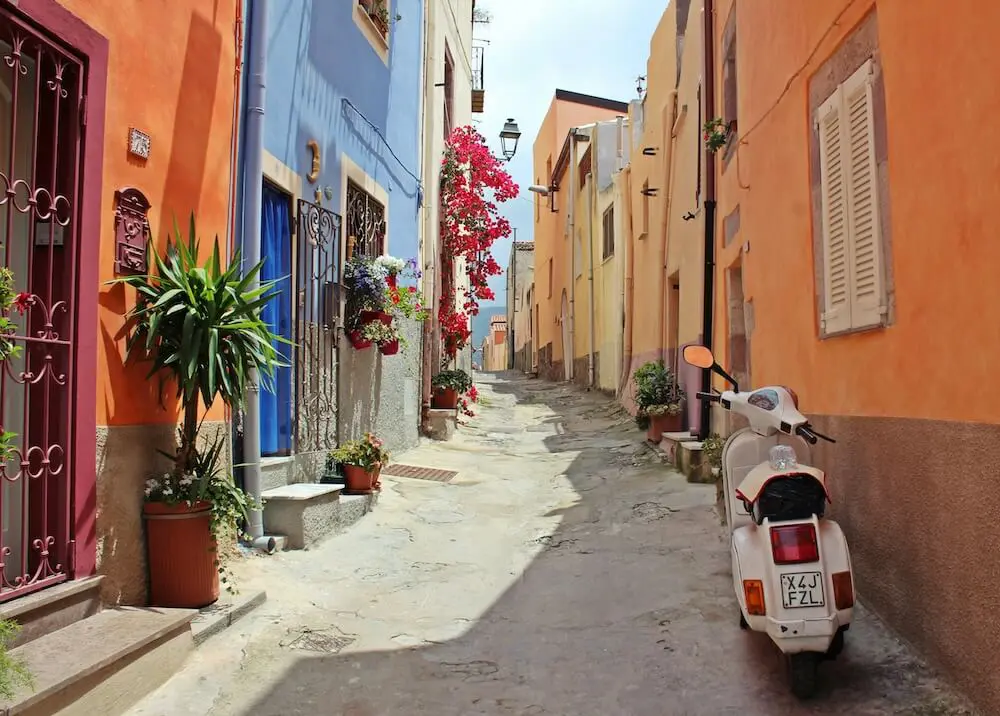
Where Italian is spoken
Italy
Italy has a population of around 59 million, virtually all of whom speak Italian as a first or strong second language. Rome is the political centre, Milan the financial and fashion capital and engine of the northern economy, Naples the cultural heart of the south and Florence a major tourism and luxury destination. The prosperous, industrialised north and the less developed south have distinct economic characters.
Switzerland
Italian is one of Switzerland’s four official languages, spoken mainly in Ticino and parts of Graubünden by around 700,000 people. Swiss Italian has its own vocabulary and conventions.
San Marino and Vatican City
Both are Italian-speaking enclaves with their own institutional character and translation needs.
Slovenia and Croatia
Small Italian-speaking communities remain along the Adriatic coast, a legacy of the Republic of Venice.
The Italian diaspora
Massive waves of emigration from the late 19th century to the mid-20th took Italians to the Americas, Australia and Northern Europe. Argentina and Brazil have enormous communities of Italian descent, with Argentina’s estimated at over 20 million, and the United States has over 17 million people of Italian descent. Australia, Canada, Germany, the UK, Belgium and Switzerland also have significant communities. They vary in how actively they maintain the language, but Italian identity remains strong.
Did you know?
A musical language
Italian is often referred to as the language of music, because many musical terms, like forte (loud), piano (soft), and allegro (fast), come from Italian. This tradition dates back to when Italy was a cultural hub during the Renaissance, shaping the language of classical music.
Awe-inspiring sights
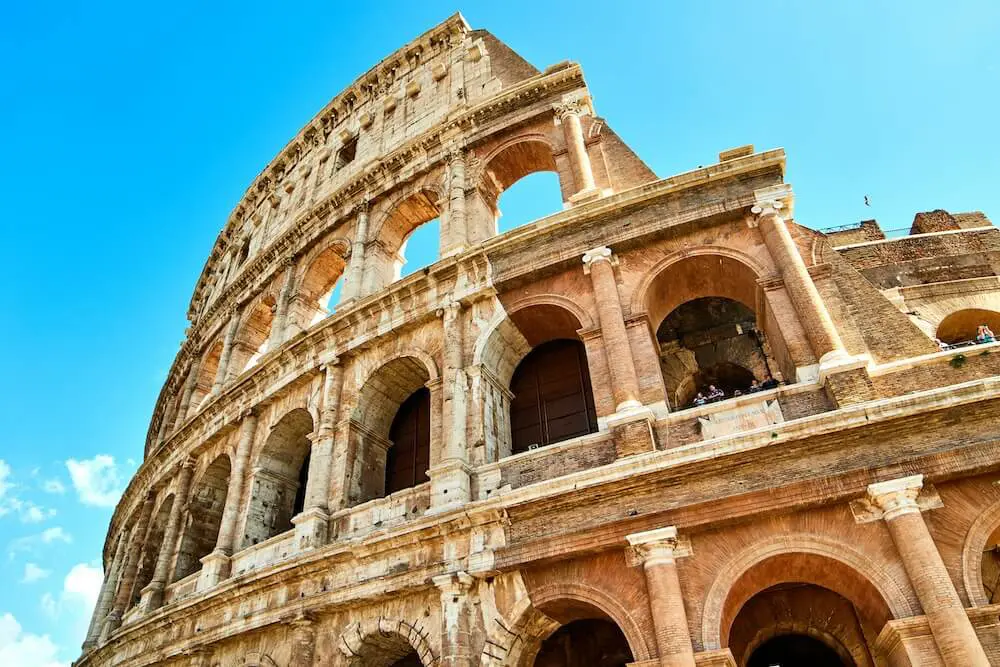
With 58 UNESCO World Heritage sites, Italy tops the list globally. From ancient ruins like Pompeii to the breathtaking architecture of Venice, Italy is a treasure trove of cultural and historical landmarks.
Dialect basis
Until the unification of Italy in the 19th century, the country was divided into various regions, each with its own dialect. The Italian language we know today is based on the Tuscan dialect, largely because of the influence of literary giants like Dante Alighieri.
“I am a will writer and had taken will instruction from an elderly lady, who has poor eyesight and limited English skills. Atlas translated the Will I had written into Italian for me, certified the translation and then Visited with me to see my client at her home and read over the Will in Italian so that my client could understand it properly.
This service was so professional, the interpreter was delightful and skilled and my client was happy to sign the Will and I was confident that she completely understood it which is my job. Atlas and Ilenia the interpreter were fantastic and I shall use them again if required.”
Key industries in Italian-speaking markets
Fashion and luxury goods
Italy is the global centre of fashion and luxury, home to Gucci, Prada, Armani, Versace, Fendi, Dolce and Gabbana and many more. The standards for Italian-language content are extremely high, and a poorly translated luxury communication is noticed immediately.
Automotive and engineering
Ferrari, Lamborghini, Maserati, Alfa Romeo and Fiat have Italian roots, and the broader engineering sector, including precision machinery, industrial equipment and packaging technology, is large and internationally active.
Food and beverage
Italian food is perhaps the most globally recognised national cuisine, and wine, olive oil, cheese, cured meats and pasta are major exports with substantial labelling, certification and documentation requirements. Strict protected designation of origin rules have their own translation and legal implications.
Design and architecture
Italian design has a global reputation built on combining aesthetics with function, and firms and manufacturers produce portfolios, specifications and commercial materials that regularly require translation.
Pharmaceuticals and life sciences
Menarini, Recordati and Chiesi are significant pharmaceutical companies, alongside a thriving generics industry. Regulatory submissions to AIFA, the Italian Medicines Agency, clinical documentation and patient information all require precise translation.
Financial services
Milan is one of Europe’s major financial centres, and banking, insurance and asset management generate regulatory, compliance and client documentation in Italian.
Tourism and hospitality
Italy is consistently among the world’s top destinations, and hotels, restaurant groups and tour operators generate substantial multilingual content, with Italian essential for the domestic market.
Legal and EU institutional
As a founding EU member, Italy is embedded in EU processes, and legal translation involving Italian is a large and demanding field.
Media, publishing and entertainment
Italy has a rich publishing tradition and a significant film industry, generating subtitling, dubbing and rights documentation.
Why translate your business materials into Italian?
The Italian consumer expects Italian
English is not an acceptable substitute, particularly for purchases of significance, financial products, healthcare or legal matters.
Legal requirements are comprehensive
Consumer contracts, pharmaceutical labelling, financial disclosures, food packaging and employment documentation all carry Italian-language requirements that regulators enforce.
The luxury and fashion sectors demand perfection
Where the brand is everything and language is part of the brand experience, the difference between technically correct Italian and Italian that sounds genuinely native is the difference between belonging and not.
The food export opportunity is significant
Protected designations such as Parmigiano Reggiano, Prosciutto di Parma and Barolo create specific requirements around certification, labelling and protection of geographic indications.
The diaspora is large and culturally engaged
Italian communities in Argentina, the US and Australia keep strong cultural connections, and communicating with them in Italian builds goodwill.

Why trust Atlas with your Italian translation?
Native Italian speakers matched to your sector
The translator who works on your luxury campaign, your pharmaceutical submission, your automotive manual and your restaurant group’s website are four different people with four specialist profiles. We match on subject matter and sector as well as language.
Human translation, always
We never use AI for translation. Every Italian project is handled by a real person who is a native speaker of the language.
A named project manager on every job
Every Italian project is led by a dedicated member of our team responsible for quality and delivery end to end. You will always have a real person to call.
ISO-certified quality
Atlas holds ISO 9001:2015 (Quality Management) and ISO 17100:2017 (Translation Services) certifications, and was one of the first UK translation agencies to achieve the latter. These provide documented quality assurance for all our clients, but for some industries it’s a non-negotiable.
More than translation
We also offer proofreading, interpreting, subtitling, voiceover and typesetting, so a project involving more than a single document can be managed in one place.
35 years of experience
Italian is one of our most in-demand languages and has been since Atlas was founded in 1991. Our reviews on Google and Trustpilot reflect what clients tell us: that the quality of the work and the people handling it are both worth coming back for. If you have an Italian project to discuss, we would love to hear from you.
Why trust Atlas Translations?



Read more about our commitment to quality
Certified translations by certified humans

Frequently asked questions
How much does Italian translation cost?
Projects vary in need, length, and complexity. If you’re interested in our services and need a fast cost estimate, use our price calculator. Alternatively, you can request a quote or call us to talk it through on 01727 812 725.
How long does it take?
How long is a piece of string? It really depends.
It’s best to give us a call on 01727 812 725 to discuss your project and we can give you a more precise timeframe. We are known for our speedy turnarounds, though…
Do you work with any language?
Looking for more than just Italian?
We are confident that we have your needed language covered. From American English to Zulu, we’ve worked on more than 340 languages since 1991, including Latin and Ancient Greek. Read more about the languages we offer.
How do I know I can trust Atlas Translations?
Atlas Translations holds two ISO certifications — ISO 9001:2015 (Quality Management) and ISO 17100:2017 (Translation Services). If the project is confidential, we can sign NDAs for extra peace of mind.
Are you wondering if we’re up to date on privacy? We registered with the Information Commissioner’s Office (ICO) over twenty years ago, and we have always prioritised data protection.
Rad more about our commitment to quality.
Atlas Translations are here to support you. Whether you’re an individual, a SME or a multinational corporation, we can help.
Need an Italian translation?
Email us on team@atlas-translations.co.uk
Call us on 01727 812 725
Tell us some details and get a quote
Use the chatbox to start a conversation. It’s a real-life human, no bots here! (During UK business hours – we do need to sleep.)
See more options on our contact page.