Dutch translation
Dutch is the national language of the Netherlands, a small country in north-western Europe. There are around 25 million native speakers, primarily found in the Netherlands, but there is also a large Dutch-speaking community in the neighbouring country of Belgium. There are smaller collections of Dutch speakers in the South American country of Suriname, and Caribbean islands such as Aruba and Sint Maarten. Dutch shares many similarities with its closest relatives, English and German. However, it is more closely linked to German, as these languages haven’t had the Latin influence that has affected English.
A language at the heart of European commerce
Dutch is a West Germanic language, in the same family as English and German, which means English speakers often find it the most approachable of the European languages they encounter. Vocabulary overlaps are frequent and grammatical structures feel somewhat familiar. This familiarity is deceptive, though. Dutch has its own grammatical gender system, its own idioms and its own register conventions, and a translation that leans too heavily on apparent similarities tends to sound wrong to a native speaker in ways that are hard to pinpoint but immediately felt.
Dutch is spoken by around 24 to 25 million people worldwide as a first language: roughly 17 million in the Netherlands and around 6.5 million in Belgium, where the variety is known as Flemish (Vlaams) and is the official language of the Flanders region. Afrikaans, spoken in South Africa and Namibia, is a daughter language of Dutch that diverged over three centuries in southern Africa. Our Afrikaans page goes into more detail if you would like to know more.
The Netherlands and Belgium are both founding members of the European Union, and Dutch is one of the EU’s 24 official languages. The EU institutions in Brussels generate an enormous volume of Dutch-language documentation, and the proximity of Amsterdam and Brussels to the centre of European policymaking means Dutch is a working language of European business and politics well beyond what its speaker numbers might suggest.
Netherlands Dutch and Belgian Dutch
Dutch as written in the Netherlands and Dutch as written in Belgium are the same language at the level of grammar and core vocabulary, but they differ in ways that matter for professional translation. Belgian Dutch tends to be more formal in register, uses different idioms in many contexts, and has absorbed more French influence, which is hardly surprising given that French is spoken just across the linguistic border. Certain words mean different things in the two countries, and certain phrases that sound perfectly natural in Amsterdam will raise an eyebrow in Ghent.
For most formal and business translation, the differences are manageable, as standard written Dutch is widely understood across both countries. For consumer-facing content, marketing and anything aimed at a specific national audience, knowing which side of the border your reader is on makes a real difference. We will always ask, and we will always match your project to a translator from the right context.
Where Dutch is spoken
The Netherlands
The Netherlands has a population of around 17.9 million, virtually all of whom speak Dutch as a first language. It is one of Europe’s most densely populated countries and one of its wealthiest, with a GDP per capita consistently among the highest in the EU. Amsterdam is the capital and cultural heart, The Hague is the seat of government and home to several major international institutions including the International Court of Justice, and Rotterdam is one of the world’s busiest ports and the logistical engine of a trade-dependent economy.
Belgium
Belgium has around 11.6 million people, of whom roughly 6.5 million are Dutch speakers in Flanders and in bilingual Brussels. Belgium is home to the headquarters of the European Union and NATO, which makes Brussels one of the most institutionally significant cities in the world. The country’s complex linguistic politics, with French, Dutch and German all holding official status, make language a sensitive subject, and getting it right in Belgian professional contexts is taken seriously.
Suriname
Suriname, on the northeastern coast of South America, is the only country outside Europe where Dutch is the sole official language. With a population of around 600,000, it has a diverse, multilingual society in which Dutch is used in government, education and formal contexts.
The Dutch Caribbean
Aruba, Curaçao, Sint Maarten, Bonaire, Sint Eustatius and Saba all have Dutch as an official language alongside local languages. These are small territories, but as part of the Kingdom of the Netherlands they generate their own specific translation needs.
The Dutch diaspora
Dutch communities are present across North America, Australia, New Zealand and South Africa, and they vary considerably in how actively they maintain the language.
Key industries in Dutch-speaking markets
Logistics, shipping and trade
The Port of Rotterdam is the largest port in Europe and one of the busiest in the world, handling over 400 million tonnes of cargo annually. The Netherlands has built its economic identity around trade and logistics, and the sector, which spans shipping, freight forwarding, customs, warehousing and supply chain management, generates a continuous flow of documentation requiring Dutch translation.
Energy and chemicals
The Netherlands is a major European energy hub and a significant centre for chemical manufacturing and processing. Rotterdam’s port complex hosts one of the largest concentrations of chemical industry in the world. The energy transition is also generating a wave of new activity in offshore wind, hydrogen and sustainable fuels, all of which come with substantial documentation requirements.
Financial services
Amsterdam is one of Europe’s leading financial centres. ING, ABN AMRO and Rabobank are among the major Dutch financial institutions, and the Amsterdam Stock Exchange, now part of Euronext, is one of Europe’s largest. The sector generates significant volumes of regulatory, compliance and client-facing documentation in Dutch.
Agriculture and food
The Netherlands is, astonishingly for a country of its size, the world’s second largest agricultural exporter by value after the United States. Dutch expertise in greenhouse horticulture, dairy farming, seed technology and food processing is globally recognised, and the agri-food sector generates steady translation demand across export documentation, technical materials and international commercial communications.
Technology and semiconductors
ASML, headquartered in Eindhoven, is one of the most strategically important technology companies in the world, and the sole manufacturer of the extreme ultraviolet lithography machines essential for producing the most advanced semiconductor chips. The Dutch technology sector extends well beyond ASML, with a strong cluster of high-tech companies in the Brainport Eindhoven region. Technical documentation in this sector is highly specialised and demands translators with technical knowledge.
Pharmaceuticals and life sciences
The Netherlands has a significant pharmaceutical and life sciences sector, with major companies and research institutions concentrated around Leiden, Amsterdam and Utrecht. Belgium, particularly around Ghent and Leuven, also has a strong biotech cluster. Regulatory documentation, clinical materials and patient information all require careful, precise Dutch translation.
Design and architecture
Dutch design has an international reputation for innovation and conceptual ambition, from the architecture of Rem Koolhaas’s OMA to the industrial design tradition of Philips and Eindhoven’s Design Academy. Dutch design firms work internationally and produce materials that frequently require translation.
EU institutional
With Brussels at the centre of EU governance and Dutch as an official EU language, the volume of Dutch-language institutional documentation, including legislation, policy papers, regulatory guidance and procurement, is substantial and ongoing.
“I am a will writer and had taken will instruction from an elderly lady, who has poor eyesight and limited English skills. Atlas translated the Will I had written into Italian for me, certified the translation and then Visited with me to see my client at her home and read over the Will in Italian so that my client could understand it properly.
This service was so professional, the interpreter was delightful and skilled and my client was happy to sign the Will and I was confident that she completely understood it which is my job. Atlas and Ilenia the interpreter were fantastic and I shall use them again if required.”
Why translate your business materials into Dutch?
High English proficiency does not mean English preference
The Dutch are among the world’s best non-native English speakers, and this can lull businesses into thinking they do not need Dutch translation. Dutch consumers and business professionals may be perfectly comfortable reading English, but they engage more deeply, trust more readily and respond more positively to content in their own language. The research on this is consistent, and experienced businesses in the Dutch market know it well.
Legal requirements apply regardless of linguistic ability
Consumer contracts, financial product disclosures, pharmaceutical labelling and employment documentation all carry Dutch-language legal requirements for businesses operating in the Netherlands or Belgium. Linguistic proficiency among the population does not change these obligations.
Rotterdam makes logistics translation unavoidable
For businesses involved in European trade, which is a very large number of businesses, documentation flows through Rotterdam. Customs declarations, shipping documentation and trade contracts that touch the Dutch port network will at some point require Dutch-language handling.
Belgium is a dual-language challenge
Operating in Belgium means navigating both French and Dutch language requirements, sometimes in the same city. Brussels is officially bilingual, and public-facing communications in the capital are expected to work in both languages. Navigating this needs careful planning and an experienced translation partner.
The agri-food and technology sectors reward deep engagement
Dutch expertise in agriculture, food technology and semiconductors is world-leading, and businesses that engage with Dutch partners in these sectors in Dutch, rather than defaulting to English, build stronger and more trusting relationships.
Did You Know?
More bikes than people
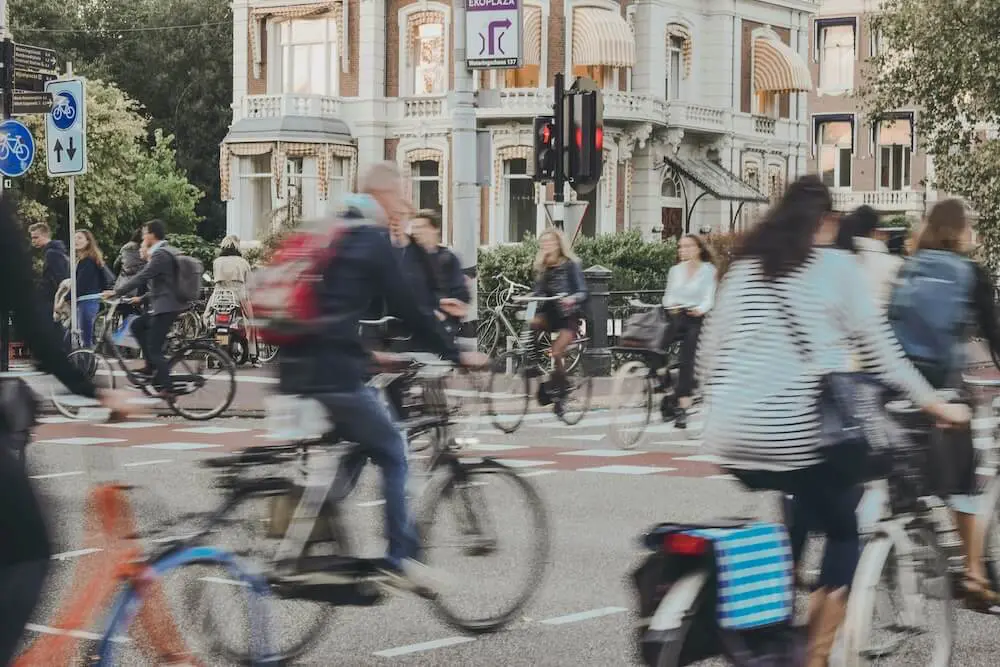
Along with one of two other neighbouring countries, The Netherlands is famous for its cycling culture. In fact, the country has more bicycles than people!
A nation below sea level
Approximately a quarter of the Netherlands lies below sea level. Luckily, the Dutch have mastered civil engineering to protect their land from flooding.
Tulips, tulips, tulips
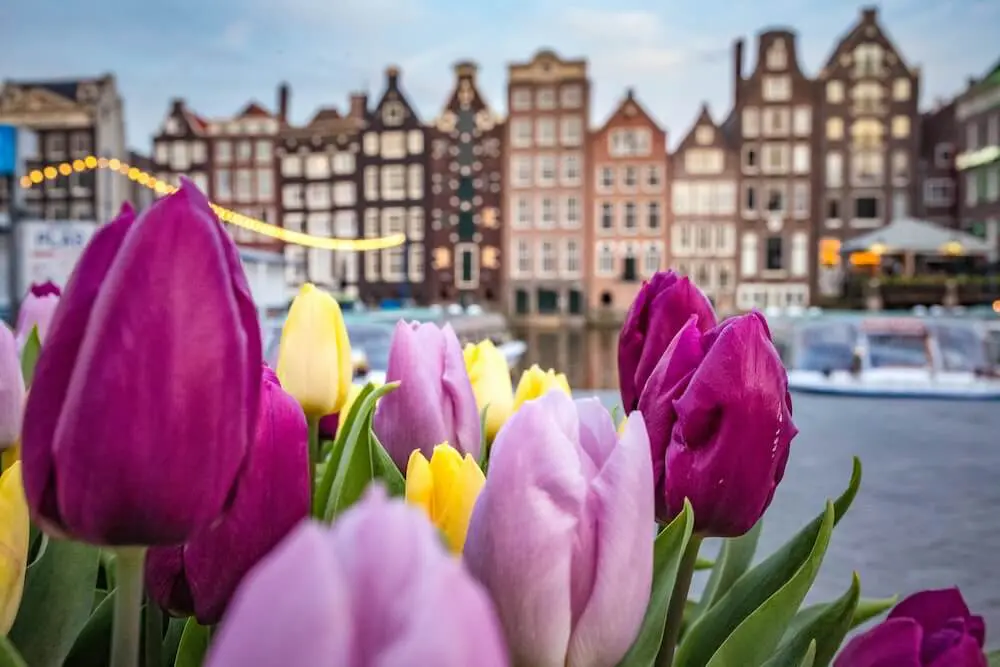
You might think this is one of the stereotypes we’re trying to avoid, but tulips are a big deal in the Netherlands. Although tulips originated in Turkey, the Dutch perfected their cultivation and trade, making them synonymous with the country.
Getting Dutch right
Dutch has a few characteristics that trip up inexperienced translators. The compound noun system, in which Dutch happily strings multiple words together into a single compound, can produce formidable constructions that need careful handling. The formal and informal registers of address (u versus jij or je) are a consistent decision point in any Dutch text, and getting the choice wrong, whether too formal for a consumer audience or too casual for a professional one, is immediately noticeable.
Belgian Dutch and Netherlands Dutch require careful matching to your audience. A translation produced by a Netherlands-based translator for a Flemish audience, or the other way round, will often feel slightly off in ways that are hard for a non-speaker to identify but obvious to a native reader.
Machine translation performs reasonably well with Dutch, better than with many languages, which paradoxically creates a risk. It is good enough to seem acceptable to a non-speaker while still containing the errors and unnatural phrasing that a Dutch reader notices straight away. For anything customer-facing, legally significant or professionally important, native speaker human translation remains the best choice.

Why trust Atlas with your Dutch translation?
Native speakers from the right side of the border
We always establish which market you are targeting and match your project to a translator from that context, whether that means the Netherlands or Flanders. We never treat them as interchangeable.
Sector expertise
Logistics, energy, financial services, pharmaceuticals, agriculture, technology and EU institutional work all have their own vocabulary and conventions. We match on subject matter as well as language, so the translator on your project knows your field as well as they know Dutch.
Human translation, always
Every Dutch project at Atlas is handled by a real person who is a native speaker of the language. Machine translation may look acceptable on the surface, but we do not use it as a substitute for human judgement, because Dutch readers notice the difference.
A named project manager on every job
Every Atlas project is led by a dedicated member of our team who takes responsibility for quality and delivery from start to finish. Rotterdam and Brussels are fast-moving commercial environments, and you will always have a real person to call, whatever stage your project is at.
ISO-certified quality
Atlas holds ISO 9001:2015 (Quality Management) and ISO 17100:2017 (Translation Services) certifications, and was one of the first UK translation agencies to achieve the latter. We are also members of the Institute of Translation and Interpreting, the Chartered Institute of Editing and Proofreading and the Association of Translation Companies. For clients in financial services, pharmaceuticals and legal sectors operating in the Netherlands or Belgium, these credentials provide the documented quality assurance that compliance frameworks often require.
35 years of European language expertise
We have been building genuine expertise in the languages of Europe since 1991, and our reviews on Google and Trustpilot reflect what clients tell us directly: that the quality of the work and the quality of the people handling it are both worth coming back for. If you have a Dutch project to discuss, we would be glad to hear from you.
Why trust Atlas Translations?


Read more about our commitment to quality
Certified translations by certified humans
Frequently asked questions
How much does Dutch translation cost?
Projects vary in need, length, and complexity. If you’re interested in our services and need a fast cost estimate, use our price calculator. Alternatively, you can request a quote or call us to talk it through on 01727 812 725.
How long does it take?
How long is a piece of string? It really depends.
It’s best to give us a call on 01727 812 725 to discuss your project and we can give you a more precise timeframe. We are known for our speedy turnarounds, though…
Do you work with any language?
Looking for more than just Dutch?
We are confident that we have your needed language covered. From American English to Zulu, we’ve worked on more than 340 languages since 1991, including Latin and Ancient Greek. Read more about the languages we offer.
How do I know I can trust Atlas Translations?
Atlas Translations holds two ISO certifications — ISO 9001:2015 (Quality Management) and ISO 17100:2017 (Translation Services). If the project is confidential, we can sign NDAs for extra peace of mind.
Are you wondering if we’re up to date on privacy? We registered with the Information Commissioner’s Office (ICO) over twenty years ago, and we have always prioritised data protection.
Rad more about our commitment to quality.
Atlas Translations are here to support you. Whether you’re an individual, a SME or a multinational corporation, we can help.
Need a Dutch translation?
Email us on team@atlas-translations.co.uk
Call us on 01727 812 725
Tell us some details and get a quote
Use the chatbox to start a conversation. It’s a real-life human, no bots here! (During UK business hours – we do need to sleep.)
See more options on our contact page.