Mandarin Chinese translation
If there is one language every internationally minded business has thought about at some point, it is probably Mandarin Chinese. With around 920 million native speakers, and well over a billion speakers in total, it is the most widely spoken language in the world by native speaker count. It is the official language of the world’s second-largest economy and one of the six official languages of the United Nations, and its global commercial significance has been growing for decades. If Mandarin is not already part of your translation strategy, it’s worth asking: why not?
A language, a script and a civilisation
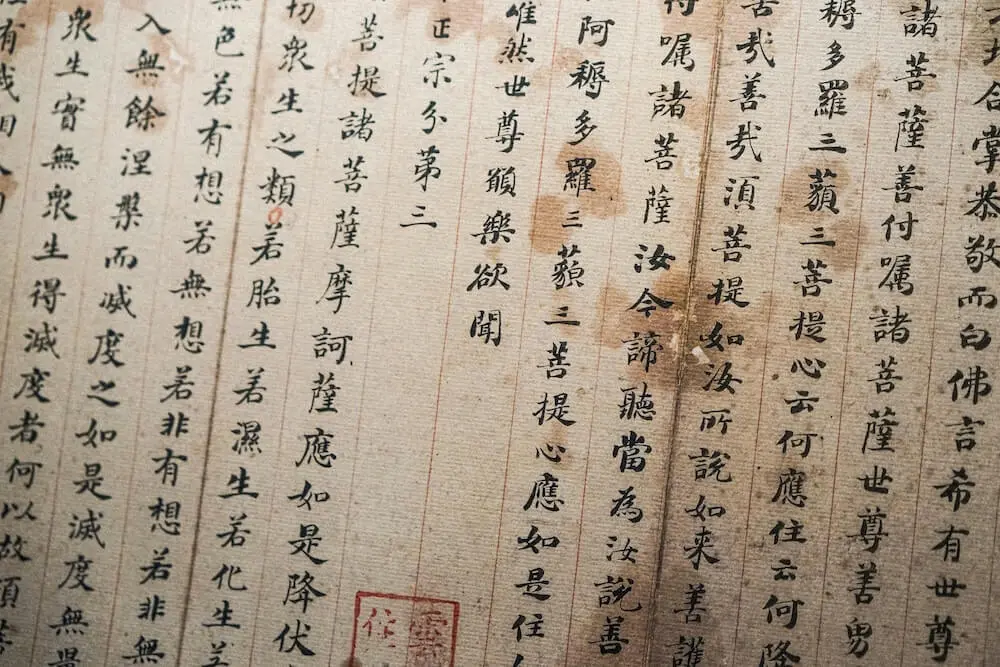
Mandarin, known in Chinese as Pǔtōnghuà (普通话), meaning ‘common speech’ is the standardised form of Chinese based on the Beijing dialect. It is the official language of the People’s Republic of China and of Taiwan (where it is called Guóyǔ), and one of the four official languages of Singapore.
Written Chinese exists in two forms that matter enormously for translation. Simplified Chinese, introduced in mainland China in the 1950s and 60s as part of a literacy drive, uses streamlined characters with fewer strokes and is used in mainland China, Singapore and Malaysia. Traditional Chinese is the older form, with more complex characters, and is used in Taiwan, Hong Kong and Macau and by many overseas Chinese communities.
The two are not interchangeable. Mainland readers are generally unfamiliar with Traditional characters, while Taiwanese and Hong Kong readers often find Simplified characters jarring or associate them with the mainland in ways that carry political and cultural weight. Choosing the right script for your audience is one of the first and most important decisions in any Chinese project, and we always have that conversation before work begins.
Mandarin or Cantonese?
Mandarin is the official spoken language in mainland China. Cantonese is the mother tongue of the majority of people in Hong Kong and Macau. The local laws stipulate that ‘Chinese’ (without specifying which spoken or written form) is a second official language in both places alongside English in the case of Hong Kong, and Portuguese in Macau.
Cantonese and Mandarin are both Chinese languages, part of the Sino-Tibetan family, and they share a written tradition in Chinese characters. But they are not mutually intelligible in speech. A Cantonese speaker and a Mandarin speaker, talking to each other in their respective languages, will understand very little of what the other is saying. The vocabulary, the pronunciation, and the tonal system are all significantly different.
One thing clients often don’t realise is that Mandarin and Cantonese are spoken languages, and not written languages. In fact, it is Standard Written Chinese that reunites all Chinese speakers. A piece of Chinese text can always be read out in Cantonese, Mandarin or indeed any other Chinese dialect. However, due to complex historical reasons, there are currently two different scripts (or character sets) in use to write Standard Written Chinese, namely Traditional Chinese and Simplified Chinese. So when we receive a request for Chinese translation, we need to know what region the translation is destined for.
Where Mandarin is spoken
Mainland China
China is home to the overwhelming majority of the world’s Mandarin speakers, a country of 1.4 billion people with extraordinary geographic, economic and cultural diversity. Mandarin is the language of education, government and national media, but it coexists with dozens of regional languages. Cantonese, Shanghainese, Hokkien and Hakka remain very much alive, which is why treating Chinese as a single undifferentiated language is a mistake. For national-level communication, Mandarin in Simplified Chinese is the right choice, and for regional targeting the picture is more nuanced.
Taiwan
Taiwan has a population of around 23 million, uses Traditional Chinese and has its own distinct cultural and political identity. Taiwanese Mandarin differs from mainland Mandarin in vocabulary, tone and register in ways that matter for consumer-facing content. A translation written with mainland audiences in mind can feel subtly off to a Taiwanese reader, and sometimes not so subtly.
Singapore
Singapore is a city-state of around 5.9 million with four official languages, one of which is Mandarin. The government has promoted Mandarin among the Chinese Singaporean population since the 1970s, and it is widely spoken alongside English. Singaporean Mandarin has its own local flavour, absorbing vocabulary from English, Malay and the various Chinese languages of the community.
Malaysia
Malaysia has a significant Chinese-speaking population, around 6 to 7 million people, for whom Mandarin is an important language of education and community life alongside Cantonese, Hokkien and others.
The global diaspora
Significant Mandarin-speaking communities exist across Southeast Asia, North America, Australia, New Zealand and Europe. Some diaspora communities are predominantly Cantonese-speaking, others predominantly Mandarin-speaking, and many are multilingual, so understanding the specific community you want to reach is important.
Key industries in Mandarin-speaking markets
Manufacturing and supply chain
China remains the world’s largest manufacturing economy by a considerable margin. Supply chain communications, quality documentation, factory audits, compliance materials and commercial contracts make this one of the largest and most consistent sources of Mandarin translation demand in the world.
Technology and digital
China has one of the world’s most sophisticated and distinctive technology ecosystems, with companies such as Huawei, Alibaba, Tencent, ByteDance, Xiaomi and BYD generating enormous volumes of documentation. International technology companies entering the market must localise products, interfaces and documentation meticulously to succeed.
Financial services
China’s financial sector is the second largest in the world and growing. Cross-border transactions, investment documentation, regulatory filings and compliance materials flow between China and the rest of the world in both directions and in considerable volume.
Automotive
China is the world’s largest automotive market, for conventional vehicles and, by a large margin, for electric vehicles. Every major global brand has a significant presence, and the documentation requirements, from technical specifications to dealer communications, are enormous.
Pharmaceuticals and life sciences
China’s pharmaceutical market is the second largest in the world, and the National Medical Products Administration requires extensive Chinese-language documentation for drug registration, clinical trials and labelling.
Luxury goods and retail
Chinese consumers are the world’s largest purchasers of luxury goods, at home and abroad. Luxury brands invest heavily in Chinese-language marketing, e-commerce and customer communications, and a poorly localised brand experience is noticed and remembered.
Education
China sends more international students abroad than any other country, generating translation needs in admissions materials, academic documentation and the growing market for Chinese-language educational content.
Legal and regulatory
As Chinese businesses expand internationally and international businesses navigate the Chinese regulatory environment, legal translation has become one of the most active and demanding areas of Mandarin work, covering contracts, intellectual property, regulatory submissions and dispute resolution.
Energy and infrastructure
China’s Belt and Road Initiative has extended Chinese investment across Asia, Africa and beyond, generating project documentation in dozens of languages. Domestically, China’s energy sector, including its rapidly expanding renewables industry, is one of the largest in the world.
Tourism
Chinese-speaking tourists are among the most sought-after visitor demographics for destinations and hospitality businesses around the world, and Chinese-language content for hotels, attractions, retail and travel services is in significant demand.
“You have been such a help and we can’t thank you enough. We’re getting an amazing response. It is quite a challenge, but we wouldn’t be making our deadlines without your translation agency’s assistance. Many many thanks.”

Why translate your business materials into Mandarin Chinese?
The scale is unlike anything else
China’s middle class is already the largest in the world by absolute numbers and its spending power continues to grow. The opportunity represented by Mandarin-speaking consumers is without parallel.
Chinese consumers expect Chinese
English-language content is not treated as an acceptable substitute. Consumers, particularly for any significant purchase, expect to be addressed in their own language and script, with awareness of their cultural references and preferences.
Regulatory compliance often requires it
Across pharmaceuticals, medical devices, financial products, food and consumer goods, Chinese-language documentation is a legal requirement for market access in China.
The business-to-business opportunity is as significant as the consumer one
China’s role in global supply chains, its position as a major international investor and the growing number of Chinese companies operating abroad all mean that Mandarin matters for business relationships as well as consumer marketing.
Taiwan and Singapore are distinct markets
Both are sophisticated, high-income economies with their own cultural identities. Businesses that treat them as extensions of the mainland, for instance by using Simplified Chinese for a Taiwanese audience, will find their materials land poorly.
The diaspora is global and diverse
From Vancouver to Sydney to London to Kuala Lumpur, Mandarin-speaking communities are significant consumer and business audiences, and getting the language and script right for each requires careful audience analysis.
Getting Mandarin right
The gap between adequate and excellent Mandarin translation is particularly wide, and the consequences of getting it wrong are particularly visible. Chinese readers are sensitive to awkward phrasing, inappropriate register and cultural missteps, and they talk about them. Because Mandarin is tonal, spoken content and anything that will be read aloud needs particular care.
Machine translation for Mandarin has improved and has its uses for simple, high-volume content. For anything customer-facing, legally significant, technically complex or culturally sensitive, its limits become apparent quickly. Simplified versus Traditional, mainland versus Taiwanese versus Singaporean register, and formal versus colloquial written Chinese are all key differences, and a good translation partner will help you navigate them rather than making assumptions.
Spoken Mandarin
For audio, video and voiceover projects, regional variation in pronunciation and vocabulary becomes particularly significant. Mainland, Taiwanese and Singaporean Mandarin all sound different, and audiences notice. We always discuss the intended audience carefully before matching you with spoken language specialists.

Why trust Atlas with your Mandarin translation?
Simplified and Traditional Chinese, handled correctly
We always establish exactly which market you are targeting before a word is translated, because mainland, Taiwanese and Singaporean Mandarin each have their own conventions, vocabulary and register.
Native speakers with sector expertise
Our Mandarin translators are matched by subject matter, whether that is automotive technical documentation, pharmaceutical regulatory submissions, luxury brand marketing, financial compliance or legal contracts, as well as by regional variety.
Human translation, always
Every Mandarin project is handled by a real person who is a native speaker of the language. We use native-speaker translation throughout, not automated output with a quick review.
A named project manager on every job
Every project is led by a dedicated member of our team who takes the time to understand what you need, asks the questions that produce better outcomes and makes sure the final product works for your audience. Mandarin projects often involve character encoding, typesetting, subtitling and voiceover as well as translation, and one person overseeing them makes a real difference.
ISO-certified quality
Atlas holds ISO 9001:2015 (Quality Management) and ISO 17100:2017 (Translation Services) certifications, and was one of the first UK translation agencies to achieve the latter. For businesses in pharmaceuticals, medical devices and financial products, where Chinese-language documentation is a legal requirement for market access, our certified processes provide the assurance you need.
35 years of experience
From multinationals entering the Chinese market to UK businesses managing Chinese supply chains to individuals needing certified personal documents, we bring the same care to every Mandarin project. If you have one to discuss, we would very much like to hear from you.
Why trust Atlas Translations?



Read more about our commitment to quality
Certified translations by certified humans

Frequently asked questions
How much does Mandarin Chinese translation cost?
Projects vary in need, length, and complexity. If you’re interested in our services and need a fast cost estimate, use our price calculator. Alternatively, you can request a quote or call us to talk it through on 01727 812 725.
How long does it take?
How long is a piece of string? It really depends.
It’s best to give us a call on 01727 812 725 to discuss your project and we can give you a more precise timeframe. We are known for our speedy turnarounds, though…
Do you work with any language?
Looking for more than just Mandarin Chinese?
We are confident that we have your needed language covered. From American English to Zulu, we’ve worked on more than 340 languages since 1991, including Latin and Ancient Greek. Read more about the languages we offer.
How do I know I can trust Atlas Translations?
Atlas Translations holds two ISO certifications — ISO 9001:2015 (Quality Management) and ISO 17100:2017 (Translation Services). If the project is confidential, we can sign NDAs for extra peace of mind.
Are you wondering if we’re up to date on privacy? We registered with the Information Commissioner’s Office (ICO) over twenty years ago, and we have always prioritised data protection.
Rad more about our commitment to quality.
Atlas Translations are here to support you. Whether you’re an individual, a SME or a multinational corporation, we can help.
Need a Mandarin Chinese translation?
Email us on team@atlas-translations.co.uk
Call us on 01727 812 725
Tell us some details and get a quote
Use the chatbox to start a conversation. It’s a real-life human, no bots here! (During UK business hours – we do need to sleep.)
See more options on our contact page.